What happened
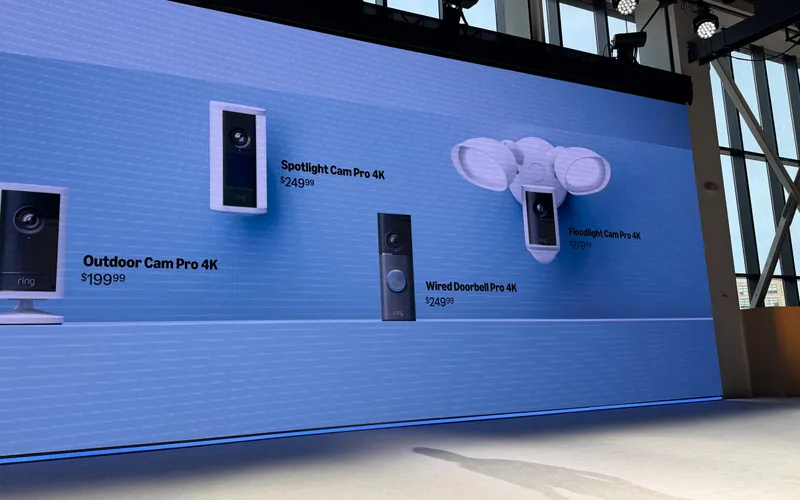
Vapi, an AI voice platform startup, reportedly hit a $500M valuation after landing Amazon Ring and beating roughly 40 competing vendors in the process. That is not just a fundraising headline. It is a major buying signal from one of the most operationally demanding companies on earth.
The important detail is not “Amazon likes AI.” Everyone already knew that. The important detail is that Ring chose a voice API infrastructure layer for real customer-facing call volume, under real reliability pressure, after a broad bake-off. In other words: this was not a pilot theater project. It was production selection.
When a company like Amazon standardizes on a vendor in a sensitive workflow, the rest of the market pays attention. Procurement teams, product leaders, and startup founders all update their assumptions about which category is real and which category is still hype.
Why this matters more than another chatbot story
Most AI coverage still over-rotates on chat interfaces. But smart home and IoT markets are increasingly voice-first, not text-first. If your customer is standing at a doorbell, on a phone call, or in a noisy home environment, they are not opening a chatbot window and typing a perfect prompt.
Voice is the interface where friction gets exposed immediately. Latency, turn-taking, interruptions, accents, call routing, escalation logic, identity checks, and handoff quality all matter in seconds. If any of those fail, users do not say “interesting model limitation.” They hang up, get angry, and churn.
So this Vapi moment is category validation for the AI voice platform stack: orchestration, telephony integration, speech-to-text, language reasoning, text-to-speech, monitoring, and fallback logic as a single enterprise-grade system. That is very different from bolting a model onto a demo IVR.
The real signal behind the valuation
A $500M AI startup valuation attached to a major enterprise customer win tells you investors are no longer pricing voice companies as “nice feature vendors.” They are pricing them as infrastructure. Infrastructure valuations happen when the market believes a product can become deeply embedded, hard to rip out, and increasingly mission-critical over time.
From a business model perspective, voice APIs are sticky. Once a team wires routing trees, QA harnesses, compliance layers, metrics dashboards, and escalation workflows into production, switching costs rise fast. That creates defensibility that many generic chatbot products struggle to maintain.
It also opens B2B2C leverage. If your platform sits between enterprise systems and millions of end users in homes, phones, and devices, each enterprise contract can influence huge downstream interaction volume. That is exactly why smart home AI buyers care so much about vendor reliability and control.
Why Amazon integration is such a force multiplier
Amazon’s infrastructure decisions often cascade. Vendors selected in one high-volume environment become default shortlist candidates in many others, because buyers assume the hard diligence has already been partially done.
That does not mean “if Amazon bought it, it is automatically best for you.” It means the burden of proof changes. Before this kind of win, a startup is explaining why it should be trusted. After this kind of win, competitors are explaining why it should not be trusted.
For founders, this is the practical takeaway: enterprise trust is now the go-to-market moat in voice. Model quality matters, but procurement confidence, observability, security posture, and operational playbooks close the deal.
What founders should do about it now
If you are building in customer support, home services, healthcare access, fintech operations, or any workflow where users naturally talk instead of type, voice should move from “roadmap maybe” to “strategic priority.”
Start with a brutally honest interface audit: where are users currently forced into text when voice would be faster, safer, or more natural? Then identify moments where real-time interaction quality directly impacts conversion, retention, or cost-to-serve.
Next, treat voice architecture as core product architecture. Do not buy an ai answering service purely on demo charisma. Evaluate production primitives: interruption handling, latency under load, noisy-environment accuracy, multilingual support, escalation to humans, and post-call analytics.
Then run controlled pilots with measurable KPIs:
First-contact resolution, average handle time, containment rate, successful authentication rate, customer sentiment shift, and cost per resolved interaction. If you cannot measure those, you cannot compare vendors honestly.
Finally, design fallback paths before launch. The winners in AI voice are not teams with zero failures. They are teams with graceful failure: quick human handoff, clear recovery prompts, and no dead-end loops.
Where the opportunity is (and where it isn’t)
The opportunity is not “build yet another generic voice bot.” That lane is already crowded and rapidly commoditizing. The opportunity is verticalized orchestration with hard outcomes: home security support, insurance claims intake, utility triage, logistics exception handling, field service coordination.
In those categories, domain knowledge plus reliable voice workflow design beats pure model novelty. That is where ai consulting can create real value too: helping enterprises redesign service operations around voice-native automation, not just adding AI to old scripts.
For regional firms and integrators, including ai consulting los angeles shops, this is a timely wedge. Many mid-market companies now want production-grade voice systems but lack internal architecture expertise. They need implementation partners who can handle security, telemetry, and change management, not just prompt writing.
Where the opportunity is weaker: thin wrappers with no proprietary data loops, no workflow depth, and no integration moat. Those products get replaced quickly when platform vendors move downmarket.
Risk checklist before you rush in
Voice automation touches sensitive surfaces fast: identity, payments, account changes, home access contexts, and personal data. If you skip controls, success can turn into liability.
Minimum controls should include call recording governance, consent flows, PII redaction, role-based access controls, prompt/response logging with retention policy, and red-team testing for social engineering attacks. You also need clear disclosure rules for when users are talking to AI versus humans.
Operationally, monitor for silent failure modes: subtle transcription drift, accent bias, escalation delays, and confidence thresholds that are too aggressive. These issues rarely show up in happy-path demos and often appear first at scale.
Bottom line
Vapi’s reported $500M valuation and Amazon Ring win is a strong market signal that AI voice platform infrastructure has moved into enterprise-priority territory. This is less about one startup and more about a broader shift: voice APIs are becoming foundational for smart home AI and high-volume service workflows.
If chatbots were phase one of practical AI adoption, voice in production IoT and support systems looks like phase two. The winners will be teams that treat voice as a reliability and systems-design problem, not a novelty layer.
For founders, the move is straightforward: identify voice-critical moments in your user journey, pilot with hard metrics, build secure fallback-rich architecture, and choose partners that can survive enterprise scrutiny. The companies that do this well will not just reduce support cost. They will control the interface where trust gets built in real time: human conversation.
Now you know more than 99% of people. — Sara Plaintext