What happened
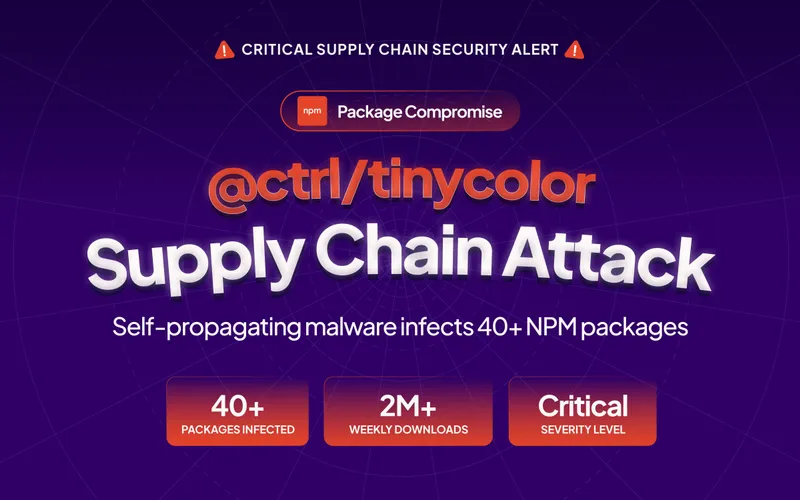
TanStack, one of the most widely used JavaScript ecosystem projects, published a postmortem after an npm supply chain attack that turned trusted packages into an attack vector. The story blew up on Hacker News, and for good reason: this was not some tiny abandoned library. This was modern production infrastructure used by a massive number of teams.
The core issue in plain English: attackers found a way into the software distribution path, then pushed or influenced malicious package behavior through a channel developers normally trust. That trust channel is the whole game in npm security. Most teams install and update dependencies automatically, and CI/CD pipelines often pull packages without a human reviewing every version.
When a package with broad adoption is compromised, the blast radius scales instantly. One bad release can propagate through direct installs, transitive dependencies, Docker builds, serverless deploys, and local dev machines in hours. That is why this incident hit such a nerve with founders, staff engineers, and security teams.
Why this matters more than one project
This is not just a TanStack problem. It is an open source vulnerability pattern that affects almost every startup shipping software. If your product uses npm, pip, crates, Maven, or any modern package ecosystem, you are in the same risk category by default.
The old mental model was “open source is free leverage.” The updated model is “open source is leverage plus inherited attack surface.” Every dependency adds functionality and risk at the same time. In practice, a typical web app depends on hundreds or thousands of packages when you count transitive dependencies. Most teams cannot name all of them, much less audit them continuously.
That is why supply chain attack stories keep repeating. Attackers do not need to break your app directly if they can compromise something your app already trusts. It is cheaper for them, and often more scalable.
How popular npm packages become attack vectors
There are a few common paths, and this incident reinforced all of them. First, maintainer account compromise: if an attacker gets publish credentials, they can ship malicious code under a legitimate name. Second, build pipeline compromise: if CI, tokens, or release scripts are exposed, attackers can inject artifacts even without full maintainer control. Third, dependency confusion and typosquatting patterns can trick automated systems into pulling the wrong package.
The worst part is that malicious changes can be subtle. A payload may only execute in production, only under certain environment variables, or only for selected targets. That means simple smoke tests can pass while compromise still exists.
Once that code lands, attackers typically go after secrets first: API keys, cloud credentials, tokens, wallet keys, or internal URLs. From there, they can escalate to data exfiltration, lateral movement, or ransomware staging.
The business impact founders underestimate
Most founders still think software security is mainly a compliance checkbox for enterprise deals. That is outdated. Supply-chain compromise is now a direct business continuity risk.
If a dependency attack hits your stack, you can lose engineering velocity for days while teams freeze deploys, rotate credentials, audit logs, and rebuild trusted baselines. You can also lose customer trust quickly if incident communication is slow or unclear.
There is also a hard revenue angle. Procurement teams increasingly ask about software security controls before signing. If your answers are vague on dependency management, you will feel it in sales cycles, security reviews, and legal terms.
This is also why AI consulting conversations are changing. Good ai consulting now includes secure SDLC and dependency governance, not just model integration demos. If you are offering ai consulting los angeles style services to startups, this category has become a core advisory lane, not a side note.
What to do right now (this week)
First, generate a complete software bill of materials for every production service. You cannot secure what you cannot enumerate. Include transitive dependencies, lockfiles, and build-time tooling.
Second, lock dependency versions and enforce deterministic builds. “Latest” is not a strategy. Pin exact versions, protect lockfiles, and require review for dependency diffs.
Third, rotate sensitive credentials that might have been exposed in build or runtime environments. Assume compromise windows exist unless proven otherwise. Prioritize cloud IAM keys, package registry tokens, and CI secrets.
Fourth, enforce provenance and signing checks where your toolchain supports it. Verify package integrity and publisher identity, and reject releases that fail verification.
Fifth, tighten publish security for your own packages: hardware-backed MFA, scoped tokens, short-lived credentials, least privilege, and separate release accounts from personal maintainer accounts.
Sixth, add runtime egress controls. If compromised code executes, limit what it can call externally. This single step reduces data exfiltration risk dramatically.
What to build over the next 30-90 days
Create a dependency risk tiering model. Not all packages deserve equal treatment. High-impact dependencies should get stricter update gates, extra sandbox testing, and mandatory security review.
Stand up automated alerting for suspicious package events: unusual publish times, sudden maintainer changes, unexpected install scripts, and dependency tree anomalies. This is where dedicated supply-chain monitoring tools can become a real moat for security-focused SaaS products.
Run tabletop exercises specifically for supply chain attack scenarios. Practice the actual playbook: freeze deployments, identify affected services, roll back safely, rotate secrets, notify customers, and document forensic evidence.
Move toward ephemeral credentials in CI/CD and reduce long-lived tokens. Long-lived secrets are one of the easiest ways a package compromise becomes a broader breach.
Finally, align engineering and comms. The technical fix is only half the job. Customers remember clarity, speed, and accountability during incidents.
Where AI fits into defense
AI can help on the defensive side if used correctly: anomaly detection across dependency updates, auto-triage of suspicious changelogs, and faster incident summarization for response teams. But AI is not a magic shield. It should accelerate humans, not replace security engineering fundamentals.
This also intersects with AI product operators running ai answering or ai answering service workflows. If your customer-facing AI stack depends on large JavaScript ecosystems, dependency risk can become customer-support risk very quickly. A compromised package can impact availability, response quality, and trust at the exact point users interact with your brand.
For teams in high-visibility sectors, including ai hollywood media-tech workflows where uptime and brand integrity are everything, this risk is even more reputationally sensitive.
The real takeaway
The TanStack postmortem is a wake-up call because it makes the abstract concrete. A popular, trusted npm package path became part of an attack chain, and the discussion exploded because every serious team sees themselves in that mirror.
The lesson is not “stop using open source.” That is unrealistic and wrong. The lesson is to treat dependency management as core software security infrastructure. Open source remains a superpower, but only if you run it with modern controls.
If you are a founder, your next move is simple: ask your team for the dependency incident playbook, current SBOM coverage, and credential-rotation readiness. If those answers are fuzzy, you have your priority list.
In 2026, supply chain attack resilience is no longer optional maturity. It is table stakes for building software people trust.
Now you know more than 99% of people. — Sara Plaintext