What Happened
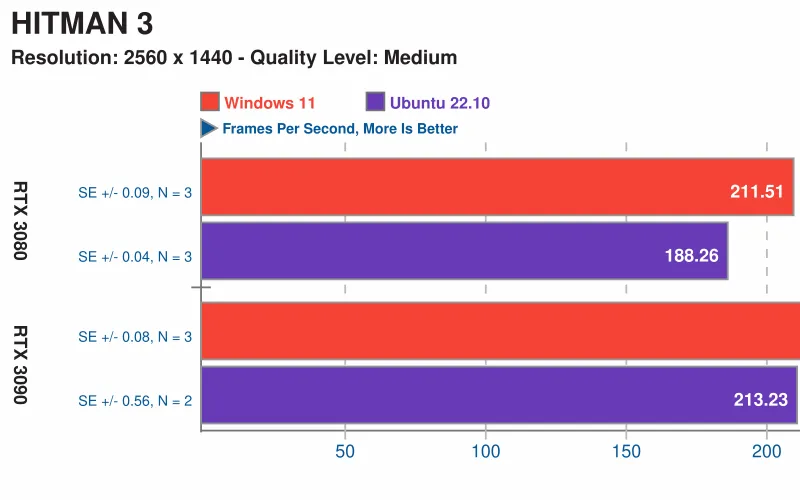
A story blew up claiming something that would have sounded ridiculous a few years ago: on identical hardware, Linux gaming can now beat Windows in real benchmarks. Not because gamers suddenly got better at tweaking launch flags, but because the stack underneath has changed in a structural way.
The core claim is this: features and performance patterns that used to be “Windows-only advantages” are increasingly being recreated or bypassed on Linux through Proton, Vulkan, and kernel-level work. In other words, Linux is no longer just emulating Windows game behavior. It is optimizing the execution path around modern gaming workloads.
That matters because the old assumption was simple: Windows runs games best, Linux runs games “well enough if you’re patient.” That assumption is now unstable.
The Technical Shift in Plain English
Most big PC games are built around DirectX. Linux does not run DirectX natively, so Valve’s Proton stack translates DirectX calls into Vulkan. Historically, people treated this translation layer as unavoidable overhead, which should make Linux slower.
But the real world got weirder. As Proton matured and Vulkan drivers improved, translation stopped being the whole story. The Linux graphics and scheduling path got better at feeding the GPU efficiently, reducing CPU-side overhead, and smoothing frame delivery in some workloads.
So the pipeline looks like this: game thinks in DirectX, Proton maps it to Vulkan, Linux kernel and driver stack execute it with increasingly aggressive optimization. If that path is cleaner than what Windows is doing for that specific game and driver combo, Linux wins.
That is why this is not just “one lucky benchmark.” It is a systems-level change where translation plus optimization can outperform native API execution in practice.
Why Proton Is the Main Character
Proton is not just a compatibility shim anymore. It has become a productized performance platform. Valve has spent years hardening it because the Steam Deck forced them to care about consistency, frame pacing, battery, shader compilation behavior, and first-launch smoothness across thousands of titles.
The Steam Deck effect is underrated here. Once you have millions of users on a Linux gaming device, every rough edge becomes a business problem. That creates pressure to optimize the full stack: Mesa, Vulkan drivers, shader caching behavior, scheduler interactions, I/O paths, and game-specific fixes.
So when people say “Linux got faster,” they really mean Valve and the open ecosystem turned Linux gaming into an industrial optimization project, not a hobbyist experiment.
Why This Matters Beyond Benchmarks
If this trend holds, Windows loses its strongest lock-in argument for gaming: “it’s where performance is best.” Once that belief breaks, distribution strategy changes fast.
Gamers care about frames, latency, and stability, not ideology. If Linux delivers equal or better performance plus decent anti-cheat and launch reliability, platform inertia weakens. That does not mean Windows collapses tomorrow. It means its moat gets shallower every quarter.
For studios, this reduces the risk of Linux support because the compatibility layer is no longer purely a compromise path. For hardware vendors, it means Linux driver quality is now revenue-relevant, not community goodwill. For storefronts, it strengthens the case for platform independence and weakens dependence on Microsoft’s ecosystem decisions.
What’s Actually Driving the Performance Gains
There is no single magic patch. It is cumulative engineering across multiple layers.
First, Proton’s DirectX-to-Vulkan translation has become much smarter and more battle-tested. Second, Vulkan implementations on Linux have matured rapidly, especially in areas that hurt real gameplay like shader behavior and CPU overhead. Third, kernel and scheduler improvements increasingly reflect gaming realities: bursty loads, tight frame-time budgets, and rapid context changes.
The key takeaway is that optimization is now targeted at gaming as a first-class workload. That is the structural shift. Linux is not accidentally faster. It is being made faster on purpose.
Who Should Care Right Now
Game studios should care because the cost-benefit math for Linux support is changing. If Proton compatibility yields strong performance and fewer support headaches than expected, ignoring Linux becomes a strategic miss, not just a backlog item.
Hardware vendors should care because gamers now notice Linux driver quality directly in benchmark narratives. Poor Linux performance is no longer hidden behind “nobody uses it anyway.” That excuse is dying.
Platform teams and publishers should care because dependency concentration is risky. If Windows no longer guarantees best-in-class performance, having a Linux-ready release path becomes a hedge against platform policy changes and storefront friction.
Cloud gaming and edge compute operators should care too. Linux-first infrastructure already dominates servers. Better Linux gaming performance can simplify deployment paths and reduce overhead between development and runtime environments.
Who Should Not Overreact
This is not a universal “Linux wins every game” moment. Performance still varies by title, driver branch, anti-cheat configuration, and engine behavior. Some games will remain better on Windows for a while, especially those tightly bound to specific Windows subsystems or lagging anti-cheat support.
Also, player experience is more than FPS averages. Update cadence, peripheral compatibility, launcher stability, and multiplayer reliability still matter. Linux can lead in raw performance and still lose a user if one critical game refuses to launch after patch day.
So treat this as a directional shift, not a blanket rule.
What To Do About It (Practical Playbook)
If you run a studio or game platform team, start with measurement, not assumptions. Build a repeatable test matrix across Windows and Linux on identical hardware for your top titles and top user GPUs. Track frame-time consistency, 1% lows, shader stutter events, and crash rates, not just average FPS.
If you are shipping PC games, add Proton validation to CI or release QA gates. You do not need full native Linux support on day one to capture most of the upside. You do need intentional compatibility testing and regression monitoring.
If you are a hardware vendor, prioritize Linux Vulkan driver quality like a product KPI. Benchmarks are now marketing, not niche technical chatter. The teams that ship stable, high-performance Linux drivers will win mindshare with power users and Steam Deck-adjacent audiences.
If you are a founder building gaming-adjacent software, assume a multi-platform future. Design telemetry, overlays, anti-cheat integrations, and launch flows to be Linux-aware now, while competitors are still treating Linux as optional.
Bottom Line
The big story is not “Linux had a good week.” The big story is that Windows API-era advantages are being neutralized by a Linux stack that is heavily optimized, commercially motivated, and battle-tested through Proton and Steam Deck scale.
When translation plus kernel and driver optimization beats native expectations, platform hierarchies start to move. That is what we are seeing: not a gimmick, but a technical power shift with real business consequences.
If you build for PC gaming, the safe assumption is no longer “Windows first, Linux maybe later.” The safer assumption now is “benchmark both, support both, and stop treating Linux performance as an edge case.”
Now you know more than 99% of people. — Sara Plaintext