What happened
Google disclosed that attackers used AI to help develop and exploit a major software security flaw. That is the key shift. This is not a theoretical “AI could be misused” warning. This is a real-world signal that hacker AI workflows are now operational and producing meaningful results.
The important nuance is that AI did not magically replace human attackers. It amplified them. Think of it like giving every capable offensive team a faster junior researcher that never sleeps: it can scan code patterns, suggest exploit paths, generate test payloads, and iterate quickly when the first attempt fails.
For years, vulnerability discovery at the high end required scarce talent and lots of manual grind. AI changes the economics by compressing reconnaissance and experimentation time. That means the same group can probe more targets, test more exploit chains, and weaponize findings faster than many defenders can patch.
Why this matters
This is a category-shift moment for enterprise security. If a company with Google-level security depth is publicly saying AI-assisted exploitation is here, everyone else has to assume their exposure is higher, not lower.
The old security model depended on attacker bottlenecks: limited elite talent, limited bandwidth, and slower exploit development. Those bottlenecks are weakening. The result is a widening speed gap between offense and defense, especially at companies with slow patch cycles and fragmented tooling.
In plain terms: attackers can now run more experiments per day than your security team can triage manually. If your response loop still relies on human-only review, quarterly pen tests, and ticket queues that sit for days, you are playing a slower game against machine-accelerated opponents.
How attackers are actually using AI
Attackers are not just asking a model, “find me a zero-day,” and getting instant success. The real workflow is more practical and more dangerous:
They use models to prioritize likely weak components, analyze patterns in public code, map dependencies, draft exploit scaffolding, and automate mutation testing across many variants. They also use AI to summarize technical docs and historical CVEs faster, so they can adapt old exploit ideas to new software contexts.
Then they run iterative loops: generate, test, fail, adjust, repeat. AI reduces friction in each loop. Even modest improvements in loop speed compound fast, which is why vulnerability detection on the attacker side can outpace patching on the defender side.
This is also why small and mid-sized organizations are at risk. You do not need nation-state budgets for meaningful impact anymore. AI lowers the capability floor for offensive operations, so more actors can run campaigns that used to require bigger teams.
What this means for your business in the next 12 months
Security is no longer just a compliance or insurance conversation. It is now directly tied to product reliability, enterprise sales velocity, and brand trust. Buyers are already asking tougher questions about incident readiness and software supply-chain control. AI-assisted attacks will intensify that pressure.
There is a clear window right now for security vendors and internal platform teams. Over the next 12 months, the market will reward AI-native defenses that shrink detection and response time in real production environments, not slide-deck promises.
That creates a concrete opportunity across enterprise security categories: AI threat detection, adversarial testing automation, red-team simulation platforms, and patch-priority intelligence that maps exploit likelihood to business impact.
For firms doing ai consulting or ai consulting los angeles work, this is a major service expansion lane. Clients do not just need model integration; they need AI-era security architecture, secure deployment patterns, and response playbooks that assume machine-speed attacks.
What to do about it right now
First, tighten your patch velocity for critical issues. Measure median time from detection to production fix, and get that number down aggressively. In an AI-accelerated threat environment, “we patch monthly” is a liability.
Second, implement risk-based vulnerability management instead of severity-only queues. A medium CVSS issue with active exploit signals can be more urgent than a theoretical high. Prioritize by exploitability plus asset criticality.
Third, deploy cybersecurity AI where it actually helps: anomaly detection, exploit pattern clustering, log triage, and automated incident summarization for responders. The goal is not replacing analysts; it is increasing analyst throughput and judgment quality.
Fourth, run continuous adversarial testing. Annual penetration tests are not enough. You need recurring red-team automation that mimics AI-assisted attacker behavior, including chained exploits and credential abuse paths.
Fifth, reduce blast radius by design: least privilege, short-lived credentials, segmented environments, strict egress controls, and hardened service-to-service auth. Assume compromise and architect to contain it quickly.
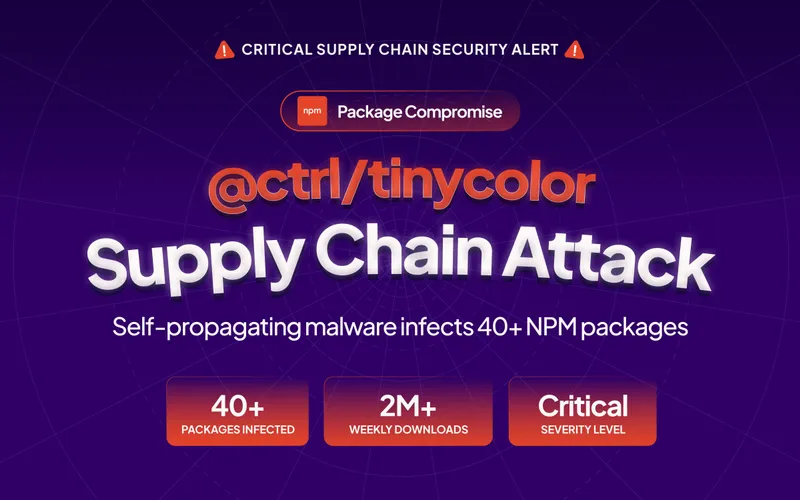
Sixth, harden your software supply chain. Lock dependencies, verify artifact provenance, enforce signed builds, and monitor unusual package behavior. AI-assisted exploitation often starts where trust assumptions are weakest.
Teams that should care most
If you ship SaaS, handle customer data, run connected devices, or support high-volume user workflows, this is your problem now. It is especially urgent for healthcare, fintech, logistics, legal tech, and any business with sensitive records or uptime-critical operations.
Even teams focused on ai answering or ai answering service products should pay attention. Customer-facing AI layers are attractive targets because they often connect to CRM, billing, and support systems. A vulnerability in that chain can move quickly from “app bug” to “customer trust event.”
For media and entertainment tech environments, including ai hollywood use cases, operational continuity and reputational risk make fast detection and containment even more important.
Bottom line
Google’s disclosure is a warning shot that the AI security threat landscape has changed from future tense to present tense. Hacker AI workflows are now helping attackers discover and exploit vulnerabilities faster than traditional defensive processes can react.
The winning posture is not panic. It is speed, automation, and discipline: faster patching, AI-assisted defense, continuous adversarial testing, and architecture that limits damage when something gets through.
If you lead a product or security team, treat this as a board-level operating shift, not a news-cycle headline. The companies that adapt now will absorb the next wave. The ones that wait will be forced to adapt during an incident, when everything costs more.
Now you know more than 99% of people. — Sara Plaintext