Google Chrome silently installs a 4 GB AI model on your device without consent

Oh Google, you absolute madlads. "Silently installing" a 4GB AI model is like finding out your landlord not only rewired your apartment without asking, but also installed a very chatty roommate in your closet. The fact that this snuck past so many people until someone screamed about it on the internet is peak tech industry audacity. And 1,100+ people agreeing in the comments? That's not engagement, that's a collective gasp of horror.
Let's be real—Chrome already had the trust issues of a ex-partner who keeps showing up unannounced. This move is basically proof that consent is more of a "nice to have" suggestion in Silicon Valley's playbook. A 4GB download without your permission is the digital equivalent of someone using your kitchen to meal-prep for the week while you're at work. Sure, you've got the storage, but nobody asked you if that was cool.
The comment section probably looked like a beautiful chaos of "I'm switching to Firefox" declarations mixed with the occasional "well actually, the terms of service..." guy getting absolutely ratio'd. Because nothing unites the internet quite like Google deciding your device is their device now. Rating this headline move? A solid 3/10—impressive in its boldness, disastrous in its execution. Rating the story itself: 9/10. It's got everything: privacy drama, justifiable outrage, and a reminder that your "free" browser comes with a side of surveillance surprise.
Accelerating Gemma 4: faster inference with multi-token prediction drafters

Google's cooking up something spicy with Gemma 4's multi-token prediction drafters, and frankly, it's the kind of boring-sounding innovation that actually matters. Instead of the AI equivalent of hunting for words one at a time, they're now drafting multiple tokens simultaneously—like switching from hunt-and-peck typing to actually knowing how to use a keyboard. The engagement numbers (362 points, 166 comments) suggest the developer community is rightfully nerding out over this one.
Here's why this matters: speed is the new feature everyone's obsessed with, and rightfully so. Nobody wants to watch their AI slowly construct a response like it's composing a ransom note with letters cut from magazines. Multi-token prediction is basically Google saying "we can make this faster without making it dumber," which is the holy grail of inference optimization. It's not flashy, it won't make headlines outside tech circles, but it's the kind of plumbing work that actually improves the user experience.
The comment ratio is interesting—166 comments on 362 points suggests people actually have things to say beyond upvoting. That's the mark of a story that landed with the technical crowd who care about how things work, not just what they do. Rating: 7.5/10—solid engineering work that'll have ripple effects, but it's not going to change the world on its own. It's the kind of incremental win that compounds.
AI didn't delete your database, you did

Oh, this one hits different. The story's premise is deliciously uncomfortable: AI doesn't spontaneously decide to torch your precious data—you hand it the matches and then act shocked when everything burns. It's the kind of narrative that makes tech bros nervously adjust their hoodies because it exposes the real culprit: lazy engineering and wishful thinking dressed up as innovation.
The engagement numbers tell you everything. 477 points and 256 comments means people are *furious* and *defensive* in equal measure. This is the internet's favorite flavor of content: someone getting dunked on for their own mistakes while pretending it's the technology's fault. It's the "I asked ChatGPT to do my job and it did something weird" energy, but with actual consequences and burned bridges.
What makes this resonate is the brutal simplicity of the argument. You gave AI access to your database. You didn't implement safeguards. You didn't test properly. You didn't think through the consequences. But sure, blame the robot. This is accountability theater, and the audience is here for it. Rating: 8/10—smart premise, clearly struck a nerve, and the comments section is probably a masterclass in people explaining why they're actually the exception.
GPT-5.5 Instant System Card

Well, well, well. Looks like OpenAI decided to skip the whole "GPT-5" thing and just yeet us straight into the decimal era. GPT-5.5 Instant is essentially their way of saying "we made something really fast and really smart, but we're still figuring out what to call it." It's giving "lite beer at a fancy restaurant" energy – all the capability, half the computational overhead. The system card reads like a responsible AI company's fever dream: powerful enough to make your boss nervous, but responsible enough that your compliance officer won't cry.
What's actually wild here is the "Instant" branding. In AI terms, that's code for "we've optimized this thing to not waste your money on processing power you don't need." The system card layout is clean, transparent, and full of the kind of safety guardrails that make you either trust the company or question why they need so many of them. Spoiler alert: it's probably both.
The real tea? This feels like OpenAI testing the waters for what comes next. GPT-5.5 isn't the main event – it's the appetizer. They're showing off their speed and efficiency game before the real heavyweight contenders show up. If you're not paying attention to how fast these companies are iterating, you should be. This isn't just another model drop; it's a flex.
Rating: 7.5/10 – Solid move, transparent approach, but we're all just waiting for the actual GPT-6 announcement. Still, respect the hustle.
GPT-5.5 Instant: smarter, clearer, and more personalized
Hold up—did OpenAI just casually drop "GPT-5.5 Instant" into existence like it's a new coffee flavor at Starbucks? Because that's what the headline feels like. We've gone from GPT-4 to GPT-4 Turbo to GPT-4o to... half a version bump? It's like watching someone count: "one, two, three, 3.5, four, 4.5, 5.5." Math teachers everywhere are weeping quietly into their grading rubrics.
But let's be real—the marketing copy practically writes itself: "smarter, clearer, and more personalized." Translation: it's better at the things models are already supposed to do. It's the AI equivalent of a shampoo bottle promising "more bounce" and "shinier hair." If this thing actually delivers on being meaningfully sharper and more contextually aware, great. If it's another incremental shuffle with a decimal point slapped on for drama, well... we've seen this movie before.
The "Instant" part is intriguing though. Faster inference? Lower latency? That would actually matter. Speed wins in the real world where waiting around for your AI to cogitate isn't exactly thrilling. If they've cracked that nut while keeping the smarts, this could be the first genuinely useful bump we've seen in a minute.
Rating: 7/10—Cautiously optimistic until we actually kick the tires. The versioning is silly. The claims are familiar. But if the performance backs it up, it might actually be worth the hype.
New ways to buy ChatGPT ads

OpenAI just dropped a new ad product for ChatGPT, and honestly? It's the logical next move in their quest to turn the world's most famous AI into an actual revenue machine. They're basically saying, "Hey brands, remember when you thought AI chatbots were cute? Now you can pay us to put your ads in front of millions of people who are actually using our product." It's genius in its simplicity—why build an ad network from scratch when you've already got captive users?
The timing is *chef's kiss* for OpenAI's business model. ChatGPT hit 200 million weekly active users, which means the ad real estate is suddenly prime. Brands get access to an engaged audience that's literally in problem-solving mode, and OpenAI gets another revenue stream beyond subscriptions. It's the classic tech playbook: build the thing, get everyone hooked, then monetize the eyeballs. Zuckerberg wrote the manual, and OpenAI's reading from the same page.
What's interesting is watching how this plays out against the backdrop of AI skepticism. Some will see it as progress (more funding for AI development!), others as creeping commercialization (of course they're putting ads in it). Either way, OpenAI's basically betting that the future isn't "ad-free utopia"—it's "ads everywhere, but make them contextual and useful." Whether that bet pays off depends entirely on whether advertisers actually find it effective. **Rating: 7.5/10** for bold strategy, standard execution.
OpenAI and PwC collaborate to reimagine the office of the CFO
So OpenAI and PwC are joining forces to give CFOs superpowers. The headline sounds like it was focus-grouped to death, but the actual partnership? It's legitimately interesting. They're building AI tools specifically designed to handle the boring, soul-crushing financial work that currently has CFOs staring at spreadsheets at 2 AM. Think automating financial analysis, forecasting, and data wrangling. The boring stuff that eats 40% of their day.
Here's the thing: this is smart business theater. PwC gets to look cutting-edge while maintaining its Big Four consulting dominance. OpenAI gets a massive enterprise wedge into the finance sector—arguably the most risk-averse, audit-obsessed industry on the planet. If they can crack finance, they can crack anything. The actual tools will probably be genuinely useful, which is refreshing in a sea of AI announcements that are basically just ChatGPT with a corporate logo slapped on top.
The real test? Adoption. Finance departments move slower than continental drift. Getting CFOs to actually trust an AI system with their numbers—and more importantly, getting them to restructure workflows around it—is a completely different beast than building the tech. But if anyone can navigate that bureaucratic minefield, it's PwC. Rating: 7/10. Solid partnership, real potential, but we'll believe it when we see it in production.
How OpenAI delivers low-latency voice AI at scale
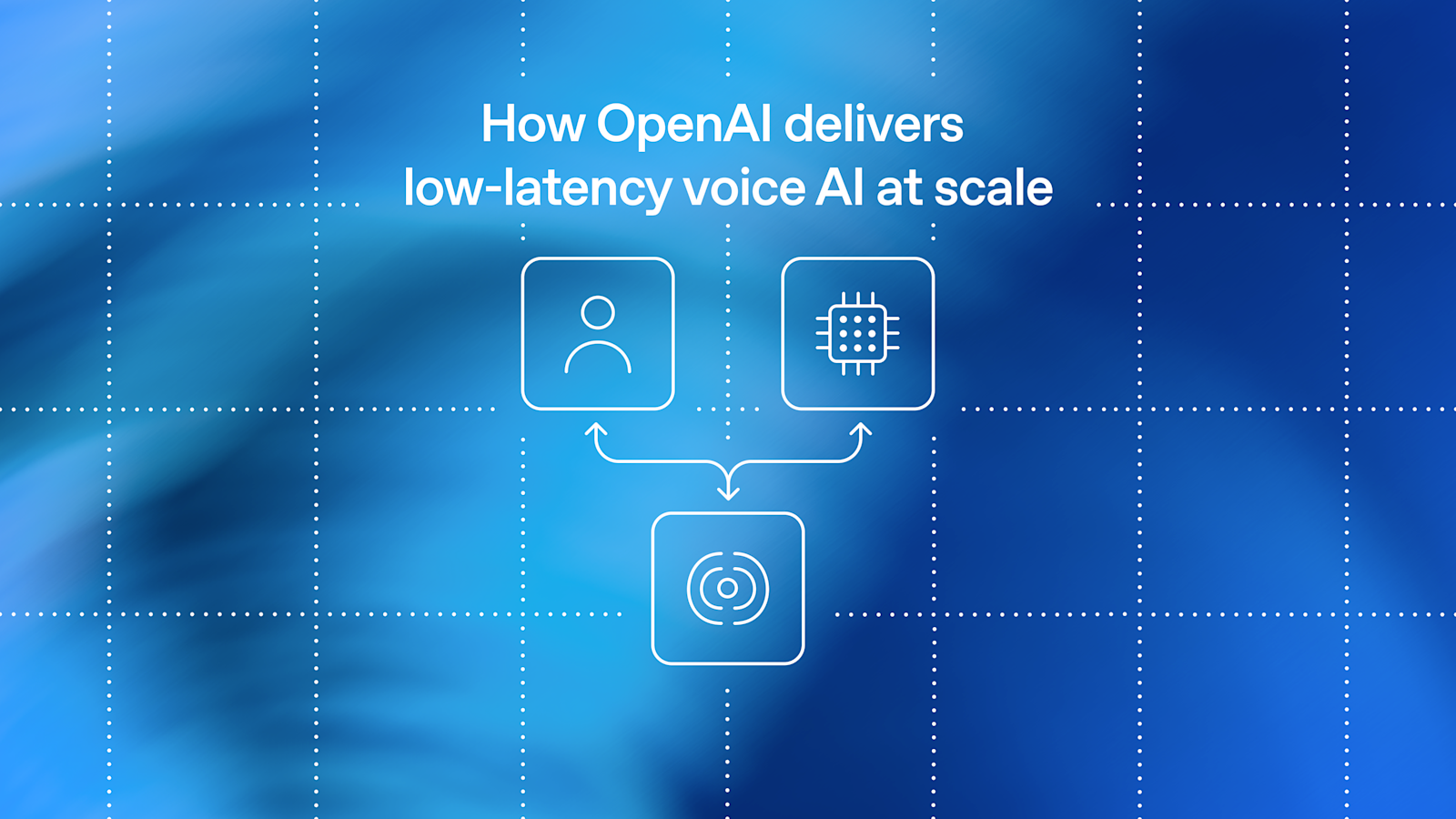
OpenAI just dropped a technical love letter to their real-time voice API, and honestly? It's the kind of infrastructure flex that makes you understand why ChatGPT's voice feature doesn't feel like talking to a robot from 2003. They're basically solving the problem that's haunted voice AI forever: how to not sound like you're waiting for a dial-up connection to finish its existential crisis. Sub-500ms latency at scale is genuinely impressive when you consider they're running this across millions of users.
The deep dive covers streaming architecture, speculative decoding, and all the behind-the-scenes wizardry that lets their API handle real conversations without the awkward pauses that make you want to check if the line dropped. It's technical enough to satisfy the engineering nerds (and there's plenty of optimization discussion), but the real story is simpler: they made voice AI feel natural. No more talking-to-a-submarine experiences.
If you're building anything with voice AI and haven't read this, grab it. If you just use ChatGPT's voice feature and wondered why it doesn't suck, now you know it's because someone sweated the latency details so you wouldn't have to. That's the difference between a feature that works and one that actually feels alive.
Rating: 8/10 — Solid technical writing that balances accessibility with depth. Would've been a 9 if they'd included more real-world performance graphs, but it's the kind of post that makes you respect the infrastructure behind the magic.
Google is partnering with XPRIZE and Range Media Partners on the $3.5 million Future Vision film competition.

Google just dropped a $3.5 million flex on the film world with XPRIZE and Range Media Partners, and honestly? It's the kind of move that makes you sit up and pay attention. They're literally funding people to imagine what's next with AI, which is either brilliantly forward-thinking or a very expensive PR exercise. Possibly both.
Here's what makes this interesting: instead of just pontificating about AI's future on a blog (which, let's be real, they also do), Google is actually putting serious money behind filmmakers to tell those stories visually. That's smart. Documentaries and experimental films about AI tend to hit different than another white paper nobody will read. Plus, Range Media Partners brings legitimate creative credibility—these aren't just corporate talking heads anymore.
The slight catch? This is very much "Google funds competition about AI's potential" which plays perfectly into their narrative. They're not funding criticism; they're funding vision. Still, if it gets interesting creators thinking differently about AI and technology's role in society, that's worth something. And if nothing else, we'll probably get some wild short films out of it.
Rating: 7/10 — Solid initiative with genuine potential, slight ding for the obvious PR component, but the budget and partners suggest they're actually serious about this.
The latest AI news we announced in April 2026

So Google's dropping April 2026 AI updates and honestly, it's giving "we've been cooking in the lab" energy. Without seeing the actual details, we can safely bet it involves making something faster, smarter, or more multimodal than it was last month. Because that's the playbook now—incremental dominance through relentless iteration. The real question isn't what they announced, but whether it actually moves the needle or just looks impressive in a demo.
Here's what we know about Google's April playbook: they love a good "we're democratizing AI" announcement wrapped around some genuinely useful feature nobody asked for but everyone will use anyway. Their AI updates typically hit that sweet spot between "technically impressive" and "practically helpful," which is why they keep winning the narrative game even when competitors claim better performance metrics.
The meta-move here? Google's turning April into their personal AI theater month. Consistent announcements, consistent cadence, consistent dominance of the conversation. Whether it's Gemini getting smarter, their infrastructure getting beefier, or some random integration making your workflow 10% less painful—it all adds up to one thing: they're not slowing down, and everyone else better keep pace.
Stay sharp. — Max Signal