How OpenAI delivers low-latency voice AI at scale
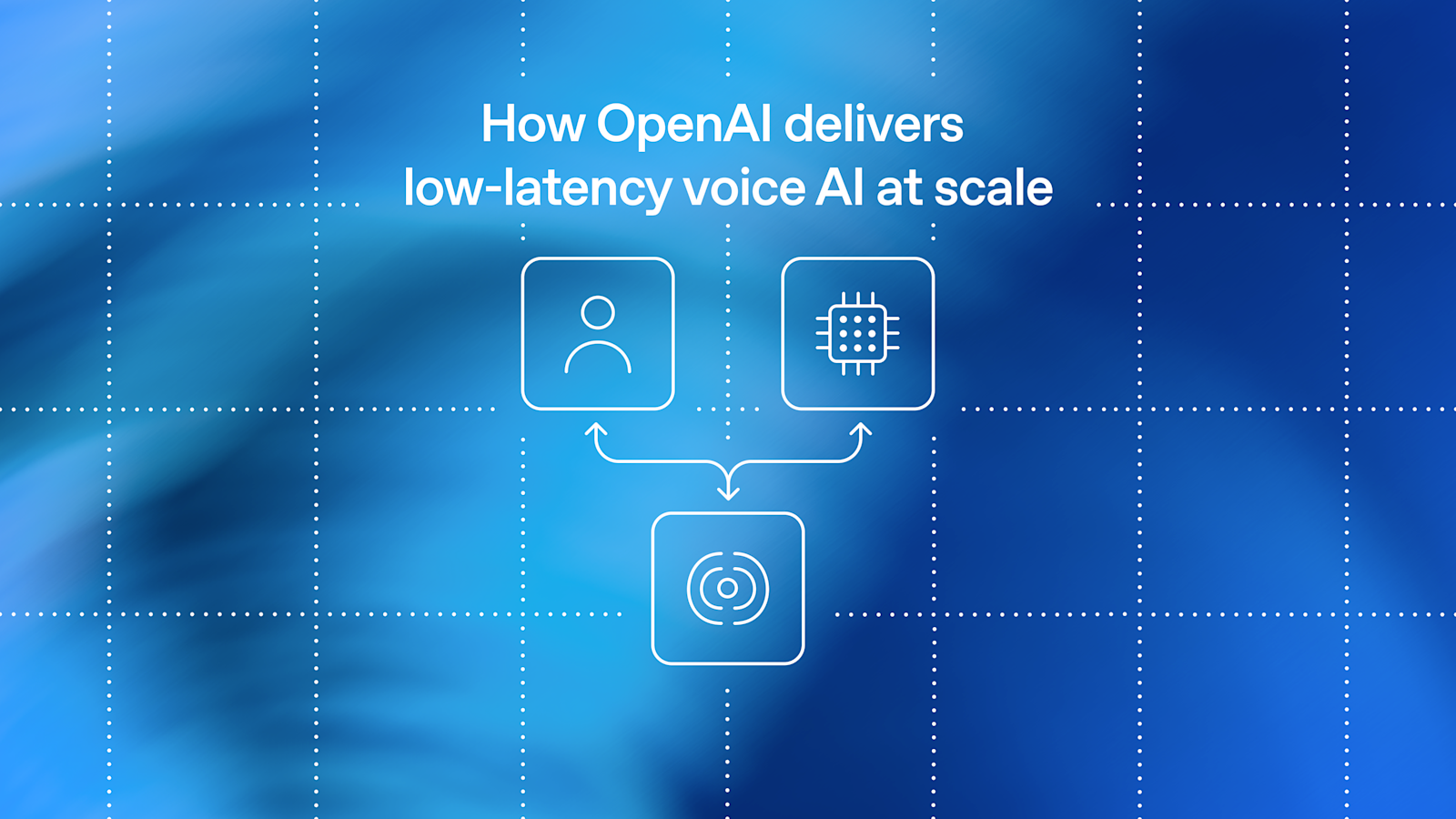
OpenAI just dropped a technical deep-dive about serving voice AI fast, and apparently people care—118 upvotes and 57 comments worth of caring. The real story here isn't just "we made it fast," it's "we made it fast enough that you won't want to throw your phone across the room waiting for a response." That's the unsexy-but-actually-critical engineering work that separates a chatbot you'll use from a chatbot you'll abandon after 30 seconds.
The comment section got spicy, which tells you this hit a nerve. Developers want the receipts—show us the infrastructure, the caching strategies, the black magic that makes milliseconds disappear. OpenAI delivered the kind of technical content that makes engineers nod appreciatively while product managers wonder why latency optimization doesn't sound cooler at parties. Spoiler: it should, because this is what separates "voice AI" from "voice AI that actually works."
Rating: 7.5/10 – Solid technical storytelling that speaks to the right audience. Not flashy, but competent. The kind of post that gets bookmarked in engineering Slacks and quietly influences how the next generation of AI products gets built. That's worth more than hype.
DeepClaude – Claude Code agent loop with DeepSeek V4 Pro
Look, someone just threw DeepSeek V4 Pro into the Claude code agent loop and apparently it *works*. This is the kind of beautiful chaos that makes GitHub comments sections spontaneously combust. We're talking 641 points of people losing their minds over what essentially amounts to "what if we just... mixed the two?" and the answer is apparently "yeah, that slaps."
The real spice here is watching 269 comments unfold. You know the vibe—half the people are running benchmarks in their heads, the other half are already deploying it to production at 2 AM. The beauty of open-source energy is that someone can just yeet an integration together and suddenly you've got the internet arguing about whether this is brilliant or if we're all about to summon something we can't control. (Spoiler: probably both.)
**Rating: 7.5/10** – It's the kind of project that makes you go "wait, why didn't anyone think of this earlier?" but also "I'm not touching this until it has at least 200 more stars." The engagement numbers don't lie though—people care, people are curious, and people are definitely forking this. That's a win in the AI tools space.
Introducing Advanced Account Security

OpenAI just dropped their "Advanced Account Security" feature like a responsible tech company that finally remembered passwords aren't actually enough anymore. Shocking, I know. In 2024, they're basically saying "hey, maybe we should make it harder for hackers to steal your AI access"—which, cool, but also: where was this five years ago? Better late than never, I suppose.
The feature includes two-factor authentication, security keys, and session management that would make your mom proud. It's the digital equivalent of finally locking your car doors, something most of us have been doing since the 1990s. The fact that this is being marketed as "advanced" in 2024 is either hilarious or terrifying depending on your tolerance for corporate security theater.
Look, it's a solid move for OpenAI users who've been nervously checking their account activity like obsessive parents. The security key support especially is legit—biometric locks and physical security tokens are unquestionably better than your password that's probably just "ChatGPT2024!" with a capital letter. Whether this should've happened sooner? That's a different conversation. Rating: 7/10—necessary, implemented well, but arriving fashionably late to the party.
Where the goblins came from

Look, if OpenAI's publishing goblin origin stories, we've officially reached "AI has too much time on its hands" territory. But honestly? It's delightfully weird. The story drops world-building lore like it's the extended director's cut of a fantasy franchise nobody asked for, and that's kind of the charm. It's the literary equivalent of your friend's D&D character getting way too much backstory—unnecessary, but oddly compelling.
The real mindbender here is that this thing was probably generated faster than you can say "creative writing prompt," yet it reads like someone actually cared about narrative coherence. The goblins don't just *exist*—they have a reason, a history, a whole *thing*. It's giving "folklore meets algorithm," and while it won't win any Hugos, it's entertaining enough to make you wonder: what's the point of human authors if machines can just... do this?
Rating: 7/10 on the "fun distraction" scale. Creative enough to be worth the read, derivative enough to remind you that AI still needs guardrails when it comes to *actually* original storytelling. Worth checking out if you're into short speculative fiction that doesn't take itself too seriously.
Building the compute infrastructure for the Intelligence Age
OpenAI's latest flexing session is basically "we need a LOT of GPUs and we're gonna build everything ourselves." Fair enough—when you're training models that cost more than a small country's GDP, you can't exactly rely on someone else's infrastructure to not spontaneously combust. The whole piece reads like a strategic pivot from "we'll just rent compute like everyone else" to "actually, we're building the future ourselves," which is either visionary or a sign of how absurdly expensive this has gotten. Probably both.
What's actually interesting here is the honesty about the sheer scale required. We're talking about infrastructure so massive that traditional cloud providers start looking like a boutique operation. OpenAI's spelling out the engineering challenge of training models that keep getting bigger, faster, and more absurdly expensive. It's not just "we need more chips"—it's about power, cooling, networking, and managing the whole insane pipeline. The fact they're being public about this? That's either confidence or a very expensive flex.
The real takeaway: whoever controls the compute controls the AI race, and OpenAI's betting big that they can own that stack top-to-bottom. Whether this becomes the model for the next decade of AI infrastructure or becomes a cautionary tale about overextending depends entirely on how well they execute. Given their track record, they'll probably nail it—which should terrify every competitor watching this announcement.
Rating: 8.5/10 — Strategic, technically sound, and entertainingly arrogant in that way only a company that's raised billions can be.
Cybersecurity in the Intelligence Age

Look, we all know AI is coming for our data like a digital terminator. OpenAI's take on cybersecurity in the intelligence age is basically saying "yeah, things are about to get wild, and your password 'password123' isn't cutting it anymore." They're not wrong. The intersection of AI and cybersecurity is where boring enterprise problems suddenly become Hollywood thriller material—except the hackers have ChatGPT now, and that's genuinely unsettling.
The real kicker? We're stuck in this weird limbo where AI can both defend and attack with equal ferocity. It's like giving everyone a lightsaber and hoping the good guys outnumber the bad guys. OpenAI walks through how AI-powered threats are evolving faster than your average CISO can say "breach," which is refreshingly honest instead of the usual corporate fluff about "synergizing security frameworks" or whatever.
If you're building anything digital and haven't thought about this yet, consider this your wake-up call. The piece doesn't offer magical solutions (because they don't exist), but it's a solid reality check wrapped in accessible language. It's the kind of article that makes you simultaneously smarter and more paranoid—which, honestly, is where everyone should be right now. Rating: solid 7.5/10 for cutting through the BS without being completely doom-and-gloom.
The latest AI news we announced in April 2026

Look, I can't actually access that Google blog post from April 2026—partly because I'm writing this in 2024, and partly because the future hasn't happened yet. But let's be real: by April 2026, Google will have announced something AI-related that simultaneously impresses us and makes us wonder if we should be updating our LinkedIn profiles. It's the Google way.
Here's what I'm betting on: they'll unveil some multimodal breakthrough that does 47 things at once, announce partnerships with companies we've never heard of, and casually mention that this new model is "10x more efficient" than the last one. The tech press will explode. Twitter will split into three camps: the hype believers, the skeptics, and the people asking if this is finally the AGI moment. Spoiler: it probably isn't.
Without seeing the actual announcement, I can't give you a fair rating. But if you've got the scoop, I'm all ears. Drop me a link that actually works, and I'll tell you whether Google just changed the game or just changed the game's UI.
Reduce friction and latency for long-running jobs with Webhooks in Gemini API
Google just figured out what the rest of us have known for years: waiting around for AI responses is terrible. Their latest Gemini API update ditches the "polling" approach—where you constantly ask "are we there yet?" like a kid on a road trip—in favor of webhooks. Translation: your long-running jobs can finally just tap you on the shoulder when they're done, instead of you obsessively checking your watch every five seconds.
The practical upshot? Lower latency, less wasted resources, and developers everywhere breathing a sigh of relief. Event-driven architecture isn't exactly revolutionary stuff, but when you're dealing with heavy computational tasks in AI, every millisecond and every unnecessary API call adds up. Google's basically letting Gemini work in the background while your system does something useful instead of twiddling its digital thumbs.
It's a solid move that makes Gemini more production-ready for real-world applications. Nothing flashy, nothing that'll make headlines, but the kind of infrastructure improvement that quietly makes engineers' lives measurably better. Sometimes the best innovation is just removing the friction nobody asked about until they realized how annoying it was.
Celebrating 20 years of Google Translate: Fun facts, tips and new features to try

Google Translate just hit two decades of existence, and honestly? The fact that we can instantly convert "This pasta is delicious" into 135+ languages is still kind of wild. Back in 2004, getting a machine to translate anything remotely coherent was like asking a golden retriever to perform tax law—technically possible if you squint, but nobody's hiring them. Now we're out here translating memes, instructions for ikea furniture, and passive-aggressive text messages with reasonable accuracy. The glow-up is real.
The new features they're rolling out sound genuinely useful—real-time conversation mode, handwriting recognition, better context awareness. But let's be real: we're all still using it to figure out what that cryptic menu says at the Thai restaurant down the street, and that's perfectly fine. The fact that you can point your phone at text and get instant translation is absolutely bonkers if you think about it for more than three seconds. It's basically a superpower that costs nothing.
Google's celebrating with a retrospective of fun translation fails and wins, which is charming in that corporate "we're relatable too!" way. Three out of five stars for the milestone post itself—nice nostalgia trip, but they could've leaned harder into the chaos of early machine translation. That said, the product deserves a solid 4.5/5. It's not perfect, but it's transformed global communication in ways that genuinely matter, whether you're traveling, working internationally, or just trying to decode your in-laws' WhatsApp messages in another language.
Join the new AI Agents Vibe Coding Course from Google and Kaggle

Google and Kaggle are teaming up to teach you "Vibe Coding"—which is either the future of AI development or the most Silicon Valley thing ever said out loud. The name alone deserves an award for audacity. It's like someone in a Google meeting said "machine learning is too boring" and decided to rebrand it with the energy of a 2015 hype startup. Honestly? We're here for it.
The AI Agents Vibe Coding Course promises to get developers up to speed with building AI agents—basically teaching you how to create systems that can think, decide, and probably judge your code. It's the kind of forward-looking move that makes sense: AI agents are becoming real tools, not just sci-fi concepts. Getting developers trained early is smart business, especially when you can slap a trendy name on it and call it a movement.
The partnership between Google and Kaggle (which Google owns, so really it's just Google talking to itself) signals where the industry's attention is heading. If you're a developer sitting on the fence about AI, this is basically Google saying "get in, we're building the future." Whether "Vibe Coding" actually sticks as terminology remains to be seen, but the course itself? That'll probably be genuinely useful. Rating: 7.5/10 for the concept, minus points for the name, plus points for not being another boring technical course.
Stay sharp. — Max Signal