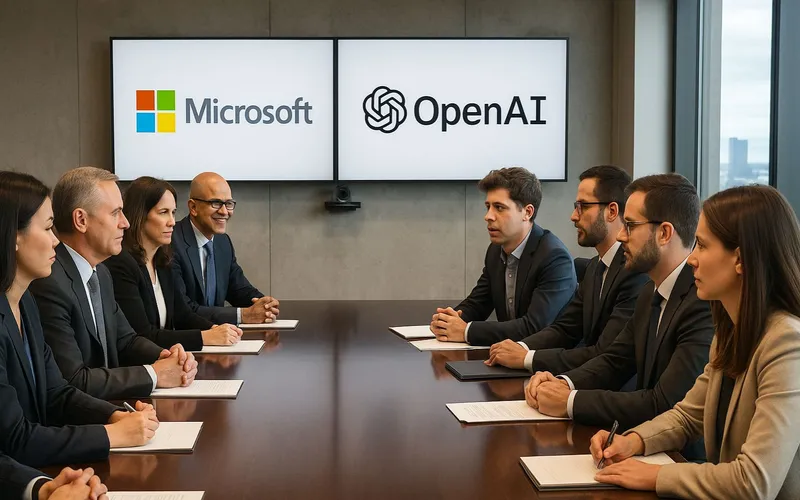
Microsoft and OpenAI end their exclusive and revenue-sharing deal
Well, well, well. The tech industry's most dramatic power couple just filed for divorce, and honestly? We saw this coming from a mile away. Microsoft and OpenAI are ending their exclusive revenue-sharing deal, which is basically tech speak for "we're not special to each other anymore." After years of cuddling up with exclusive partnerships and joint ventures, they're going their separate ways. It's giving "it's not you, it's me" energy, except it's definitely both of them.
Here's the thing that makes this absolutely wild: this deal was supposed to be the foundation of their entire relationship. Microsoft poured billions into OpenAI, slapped ChatGPT into Copilot, and acted like they'd secured AI's future. Now? Apparently that future doesn't require exclusivity. OpenAI is probably eyeing other rich tech daddies—Google, Amazon, whoever—while Microsoft is probably thinking about how Copilot can survive without being permanently attached to OpenAI's hip. The tech marriage that was supposed to reshape the industry just became an open relationship.
The 596 comments on this story are absolutely loaded with people picking sides, predicting doomsday, or celebrating the competition that might actually emerge from this split. Nobody's neutral on this one. It's messy, it's significant, and it smells like the beginning of the end for any illusions that one company could monopolize the AI boom. Grab your popcorn—this is going to get spicy. Rating: 8.5/10 for maximum chaos potential.
GitHub Copilot is moving to usage-based billing
GitHub just dropped the "we're charging you differently" bomb, and the internet is having a full-blown identity crisis in the comments section. Moving from a flat $10/month subscription to usage-based billing is a classic tech move: start with something cheap and friendly, then gradually shift to "pay for what you use" once everyone's dependent on you. It's like the streaming service playbook, except now your code suggestions come with a meter running in the background. The 353 comments suggest people have *thoughts* about this.
Here's the thing though—GitHub's banking on developers being too lazy to switch tools. And honestly? They're probably right. Copilot has become muscle memory for thousands of engineers, and spinning up a new AI coding assistant isn't exactly a Sunday afternoon project. So while the vocal skeptics are sharpening their pitchforks in the comments, most people will probably just grimace, check their usage habits once, and carry on. Classic developer energy.
The real question nobody's asking yet: how transparent will the billing actually be? Nothing kills enthusiasm faster than opening your credit card bill and wondering why you got charged $47 for autocomplete suggestions you don't remember asking for. If GitHub nails the clarity here, this could be genuinely fine. If they pull an AWS and hide the charges in seventeen different menus? Then we're looking at a mass exodus story by Q2.
OpenAI available at FedRAMP Moderate
OpenAI just cleared another regulatory hurdle that matters way more than you'd think if you work in government. FedRAMP Moderate certification means federal agencies can now use ChatGPT and API services without losing sleep over compliance nightmares. It's like getting a hall pass to use the cool tech everyone else has been raving about—except the hall pass comes with serious security audits and documentation that would make a lawyer weep.
What makes this legitimately important: government contractors and agencies have been stuck in the analog past while the private sector sprints ahead with AI. This opens the door for things like internal document analysis, policy drafting, and customer service that don't require a PhD in regulatory workarounds. Sure, it's "only" Moderate level (not the maximum Impact tier), but it's a signal that OpenAI is serious about enterprise credibility and not just chasing consumer hype.
The real winner here? Anyone tired of watching government move at glacial speed while AI reshapes everything. FedRAMP Moderate doesn't solve the policy lag problem, but it's a step toward federal agencies actually using modern tools instead of pretending AI doesn't exist. Translation: expect government services to get slightly less terrible, one ChatGPT integration at a time.
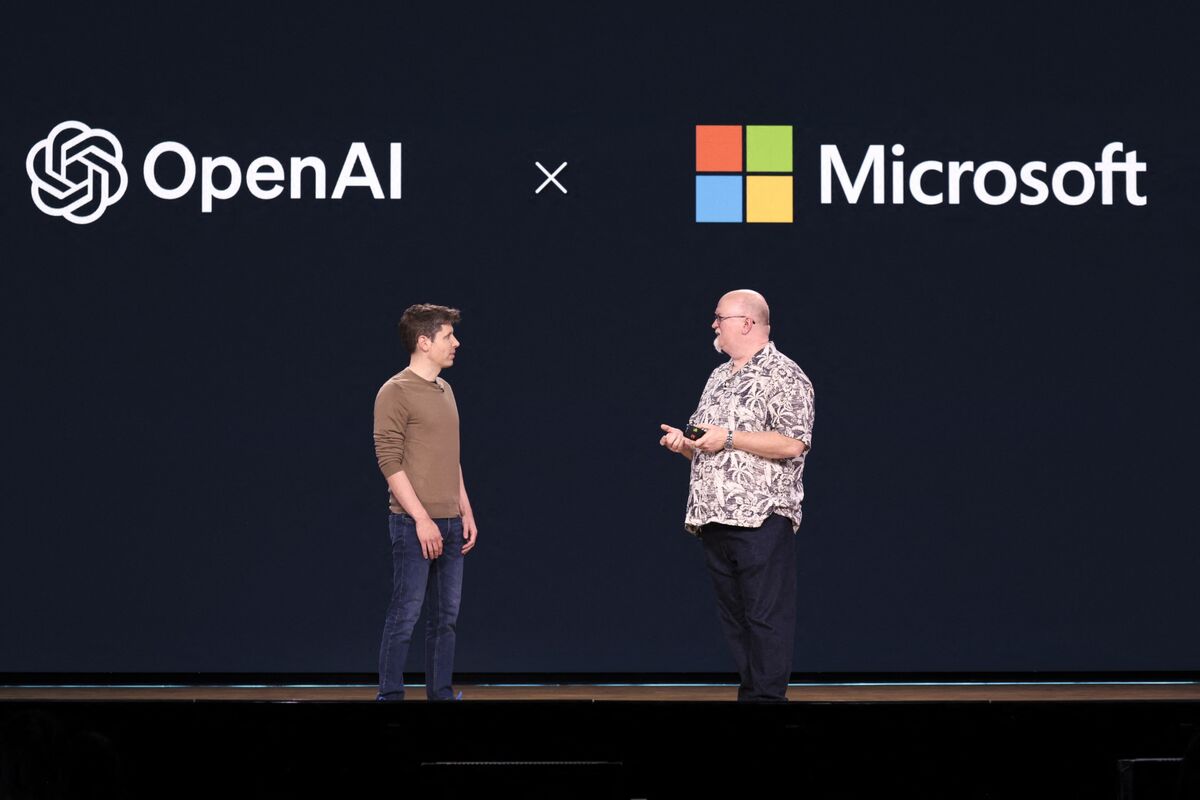
The next phase of the Microsoft OpenAI partnership
Microsoft and OpenAI just announced they're basically becoming tech's power couple on steroids. The partnership is deepening—think less "casual dating" and more "joint mortgage on a server farm." This is the kind of news that makes competitors nervously check their stock portfolios at 3 AM.
What's wild is how this actually benefits everyone watching from the sidelines. More compute, more innovation, more GPT-4 flying around in enterprise software—it's a rising tide that lifts all boats, except maybe the boats of companies hoping to out-AI these two juggernauts. The practical impact? Enterprise customers get better tools, developers get more access, and OpenAI gets the ungodly amounts of infrastructure they need to keep training models that occasionally convince people they're sentient.
The real story here is that AI dominance increasingly requires venture capital the size of small nations. This partnership basically cements a duopoly of sorts in the consumer-facing AI space, which is either thrilling or terrifying depending on your perspective. Either way, it's impossible to ignore. Rating: 8.5/10—major move, major implications, but we've heard partnership announcements before. What matters is execution.
An open-source spec for orchestration: Symphony
Look, we've all been there: you've got AI models scattered across your infrastructure like yesterday's coffee cups, and nobody knows who's talking to whom anymore. Enter Symphony, OpenAI's open-source orchestration spec that's basically trying to be the traffic cop for your AI chaos. It's a noble pursuit—finally, someone's admitting that slinging language models around without a coordinated plan is about as efficient as herding digital cats.
The beauty here is the open-source angle. Instead of getting locked into yet another proprietary ecosystem, developers actually get to peek under the hood and build their own interpretation. That's refreshing in a landscape where most AI vendors treat their infrastructure like Area 51. Symphony's focus on standardization could genuinely reduce the "wait, how do I even connect these things?" moments that plague teams trying to scale their AI operations.
That said, the real test isn't the spec itself—it's adoption. Open standards are only as useful as the community making them useful. If Symphony becomes the Kubernetes of AI orchestration, fantastic. If it becomes another well-intentioned GitHub repo with 47 stars and a README that hasn't been updated since 2024, well, we've seen that movie before. Either way, points for trying to solve an actual problem instead of just dropping another "revolutionary" model.
Rating: 7/10 – Smart move, solid execution, success depends entirely on whether people actually use it.
Choco automates food distribution with AI agents
Choco's deploying AI agents to tackle food waste and logistics like it's a real-world Tetris game. Instead of manual order-matching between restaurants and suppliers, their AI is playing speed-dating with supply chains—connecting buyers with sellers faster than you can say "fresh pasta delivery." The result? Less food spoiling in warehouses, more of it on plates. It's the kind of practical AI move that doesn't require a sci-fi imagination, just genuine problem-solving.
What's genuinely smart here is the scope. Food distribution is a grind of fragmented networks, spreadsheets, and human bottlenecks. AI agents can digest thousands of options, inventory levels, and delivery routes simultaneously—turning chaos into choreography. Choco's essentially replacing the middleman's clipboard with silicon that actually learns from every transaction.
The impact is real: reduced waste, better margins for restaurants, and smarter sourcing for suppliers. No dystopian robot takeover vibes, just AI doing the grunt work nobody wants. If scaling this works across regions, it's the kind of infrastructure play that quietly makes the economy more efficient. Not flashy, but effective. Rating: 8/10—solid execution on a genuinely useful problem.
Our principles
OpenAI's principles read like a fortune cookie got drunk and started lecturing you about ethics. "We want to build AI that benefits humanity." Sure, and I want to be a rockstar—yet here we are, both of us knowing how that story typically plays out. The real question isn't whether their hearts are in the right place; it's whether their wallets will stay there when the quarterly earnings call comes around.
What's genuinely interesting is the tension buried in their mission statement. They're simultaneously promising long-term safety research while burning through billions to train models bigger than last year's. It's like saying you're committed to sustainable living while driving a Hummer to the climate conference. The principles aren't wrong, exactly—they just feel like they were written by the marketing department after the product team already shipped.
Still, points for trying to be public about it. Most AI companies would rather have their training data leaked than their actual values, so OpenAI deserves credit for at least attempting transparency. Whether these principles actually drive decisions or just drive perception is the billion-dollar question nobody's asking loud enough.
Rating: 6.5/10—Noble intentions with a healthy side of corporate spin. More honest than most, less honest than we'd need to actually trust them.
Join the new AI Agents Vibe Coding Course from Google and Kaggle

Google and Kaggle just dropped what might be the most aggressively Gen-Z course title in the history of machine learning: "Vibe Coding." That's right—forget clean code, proper documentation, or boring stuff like best practices. Now you can learn to code with *vibes*. We're assuming "vibes" here means "AI agents that actually work," but honestly, the marketing team deserves a raise for making algorithms sound like a TikTok trend.
In all seriousness, this AI Agents Intensive Course is actually solid. Google and Kaggle are teaming up to teach developers how to build with generative AI, and the timing (June 2026) suggests they're thinking ahead for the next wave of AI-native applications. Whether you're a skeptic or a true believer in the AI revolution, learning how to actually *use* these tools beats complaining about them on the internet.
The "vibe coding" branding is admittedly brilliant—it's memorable, it's fun, and it gets people talking (hello, you're reading this). If the course content matches the energy of the marketing, this could be worth your time. Just maybe don't put "vibe coder" on your LinkedIn profile just yet.
Rating: 7/10 — Creative marketing meets legitimate skill-building. Execution matters more than the name.
8 Gemini tips for organizing your space (and life)

Google's Gemini just dropped the ultimate "trust me bro" productivity hack: eight tips for organizing your space using an AI that literally exists in the cloud. There's something deliciously ironic about an AI helping you declutter when Gemini itself is just millions of parameters lounging in Google's servers, rent-free. But hey, if you need a digital Marie Kondo moment powered by a large language model, apparently the future is now.
The tips themselves are classic organizational wisdom—nothing groundbreaking, just repackaged common sense that your mom could've told you in 1997. But here's the genius move: slapping "Gemini" on it makes it feel innovative. Suddenly, "put like items together" becomes "AI-powered spatial optimization." It's marketing theater, and honestly, we're kind of here for it. If getting your closet organized requires asking a chatbot for validation, who are we to judge?
The real takeaway? This is Google basically saying, "We have an AI now, so let's see what sticks." Spring cleaning tips are harmless enough, but it's a preview of the future: AI will probably advise you on everything from your sock drawer to your life choices. Will it be useful? Sometimes. Will it feel slightly absurd? Always. Rating: 6/10—entertaining corporate flex, but your grandmother's advice was free.
Here’s how our TPUs power increasingly demanding AI workloads.

Google's TPU story is basically the tech equivalent of "my computer is faster than your computer," except they've actually got the receipts. TPUs (Tensor Processing Units) are Google's custom silicon flex, purpose-built for AI work instead of trying to make a GPU do everything under the sun. It's like comparing a Swiss Army knife to a scalpel—sure, the knife does more, but when you need precision, you bring the blade.
The real kicker here is that as AI models get hungrier and hungrier for compute power, Google's banking on the fact that throwing general-purpose hardware at the problem is so last season. TPUs are designed from the ground up to handle matrix operations, which is basically what modern AI does all day long. It's not revolutionary in concept, but it's smart infrastructure thinking—the kind of thing that actually matters when you're running the internet's brains behind the scenes.
The piece itself is solid marketing-meets-education: it explains what TPUs are without drowning you in spec sheets, and positions Google as the obvious choice for companies serious about AI. Not exactly breaking new ground in terms of innovation announcements, but it's exactly the kind of foundational content that ranks, builds authority, and reminds enterprise buyers why they should be considering Google Cloud. Rating: 7.5/10—good infrastructure storytelling, though the "increasingly demanding workloads" angle has been done to death.
Stay sharp. — Max Signal