Anthropic + OpenAI Now Control 89% of AI Startup Revenue. Yes, That Should Change Your Funding Strategy.
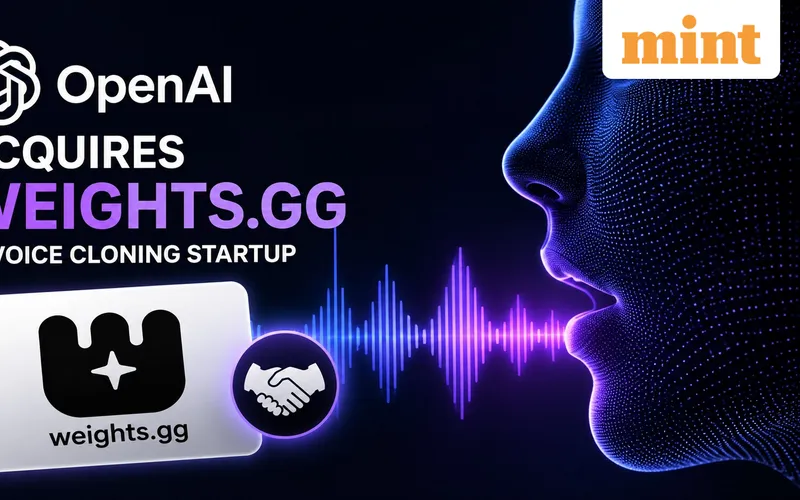
Here’s the clean version: according to reporting from The Information, Anthropic and OpenAI now account for 89% of AI startup revenue in a tracked cohort. That is not a healthy “many winners” market. That is a winner-take-most market forming in real time.
If you’re building an AI company, this number matters more than another benchmark screenshot. It tells you where customer dollars are actually going, and that signal is now so loud that venture capital behavior is shifting around it.
The practical takeaway is simple: you are either building on top of these platforms as an API-first company, or you are building a moat they cannot copy quickly. The middle lane is getting crushed.
What Happened (Without the PR Gloss)
A large chunk of AI startup revenue is now concentrated in two model providers. In plain terms, most startups aren’t making money from proprietary foundation models. They’re making money by packaging OpenAI or Anthropic capabilities into workflows, products, and industry-specific systems.
This is why the headline sounds extreme but feels familiar. You can see it everywhere: sales copilots, legal drafting assistants, AI hiring tools, support automation, AI property management software, and vertical SaaS wrappers all plugging into the same model layer.
The market voted with credit cards first, and now VCs are catching up with term sheets.
Why This Matters for AI Startup Funding
The ai startup funding conversation used to start with “How good is your model?” Now it starts with “How real is your distribution and retention?” Investors have watched too many teams burn runway trying to compete head-on with frontier labs that have giant compute, talent, and cloud partnerships.
So capital is de-risking. Funds increasingly prefer companies that can ship quickly on top of proven APIs, win a niche, and show revenue traction in months, not years. That’s one reason vertical AI keeps getting funded while generic “we built another chatbot” startups struggle.
From a venture capital perspective, this is rational: if anthropic openai market share dominates the model layer, investors would rather own the application moat than fund another expensive model race with low odds of breakout.
API-First Is Not Weak. It’s Just a Different AI Business Model.
Some founders still treat API dependence like a moral failure. It isn’t. It is often the fastest way to revenue, especially when customers care more about outcomes than model purity.
An API-first ai business model can be very defensible if your edge is workflow integration, proprietary data loops, domain trust, compliance, and distribution. If your product saves a construction firm 12 hours per estimator per week, nobody asks whether you trained your own transformer.
That’s why discussions like ai construction workflow vs bridgit.com are becoming more important than “which base model scored higher on a benchmark.” Buyers compare operational ROI and adoption friction, not model origin stories.
But API-Only Has Real Risk
Let’s not sugarcoat it: api vs proprietary is not just a technical debate. It’s a margin and control debate. If your COGS depends on third-party inference pricing, you can get squeezed. If a platform launches your feature natively, your differentiation can evaporate.
You also inherit platform volatility: pricing changes, rate limits, policy shifts, and model behavior updates that can break user trust overnight. Teams that survive this are the ones that build “provider resilience” early, not after a production outage.
That means multi-model routing, rigorous evals, abstraction layers, and contract terms that reduce surprise risk. You do not want your board learning about your dependency concentration from your monthly burn chart.
The Remaining 11%: Survival Mode or Real Moat
The non-dominant slice of revenue is not automatically doomed. But it has to be intentional. You either own a specialized model advantage that is hard to replicate, or you are running a very expensive science experiment.
Specialized can work in domains where data access, latency constraints, regulation, or on-prem requirements create barriers. Think high-stakes enterprise workflows, security-sensitive inference, or vertical tasks where generic models still underperform.
This is where serious ai consulting and ai development services in los angeles firms are quietly making money: not by pretending they built a frontier lab, but by delivering domain-specific systems customers can deploy and trust.
What Founders Should Do Right Now
First, pick your lane clearly. If you are API-first, design for speed, distribution, and retention. Build features users can’t rip out in a week: integrations, automations, human-in-the-loop QA, and data network effects tied to customer workflow.
Second, map dependency risk like a CFO, not like a hacker. Model your gross margin under different API pricing scenarios. Test failover across providers. Make sure your architecture can survive a single-provider shock.
Third, build a moat that survives model parity. In many categories, baseline model quality is converging. Your edge has to come from implementation depth: onboarding, workflow fit, domain UX, trust, and measurable business outcomes.
Fourth, tighten your funding narrative. Stop pitching “our model is better.” Start pitching “our revenue engine is better.” Show activation, retention, and expansion metrics that prove your product keeps getting pulled into daily operations.
Fifth, pick sectors where pain is acute and budgets already exist. AI hiring tools, AI property management software, legal ops, field service, and construction planning are all examples where workflow pain translates directly into spend.
What Investors Are Really Listening For
When investors hear your deck now, they are scanning for three things: distribution quality, margin durability, and platform risk management. If you can’t answer those cleanly, your “AI-native” branding won’t save the round.
They also want honesty about your stack. No one serious is impressed by vague “proprietary AI” claims anymore. The best founders are explicit: here’s what we buy, here’s what we build, here’s why customers stay even if model quality equalizes.
That is the new credibility standard in ai startup funding.
Bottom Line
The 89% figure is a market structure signal, not just a headline. It says value is consolidating at the model layer while opportunity is shifting to focused application companies with real moats.
If you’re a founder, don’t fight the last war. Build on platforms when it helps you move faster, but own the parts that make you irreplaceable. If you’re raising, show that you understand the power law and have a plan to thrive inside it.
Because right now, the market is not asking whether AI is big. It’s asking whether your company can still matter when two providers already control most of the revenue gravity.
Now you know more than 99% of people. — Sara Plaintext