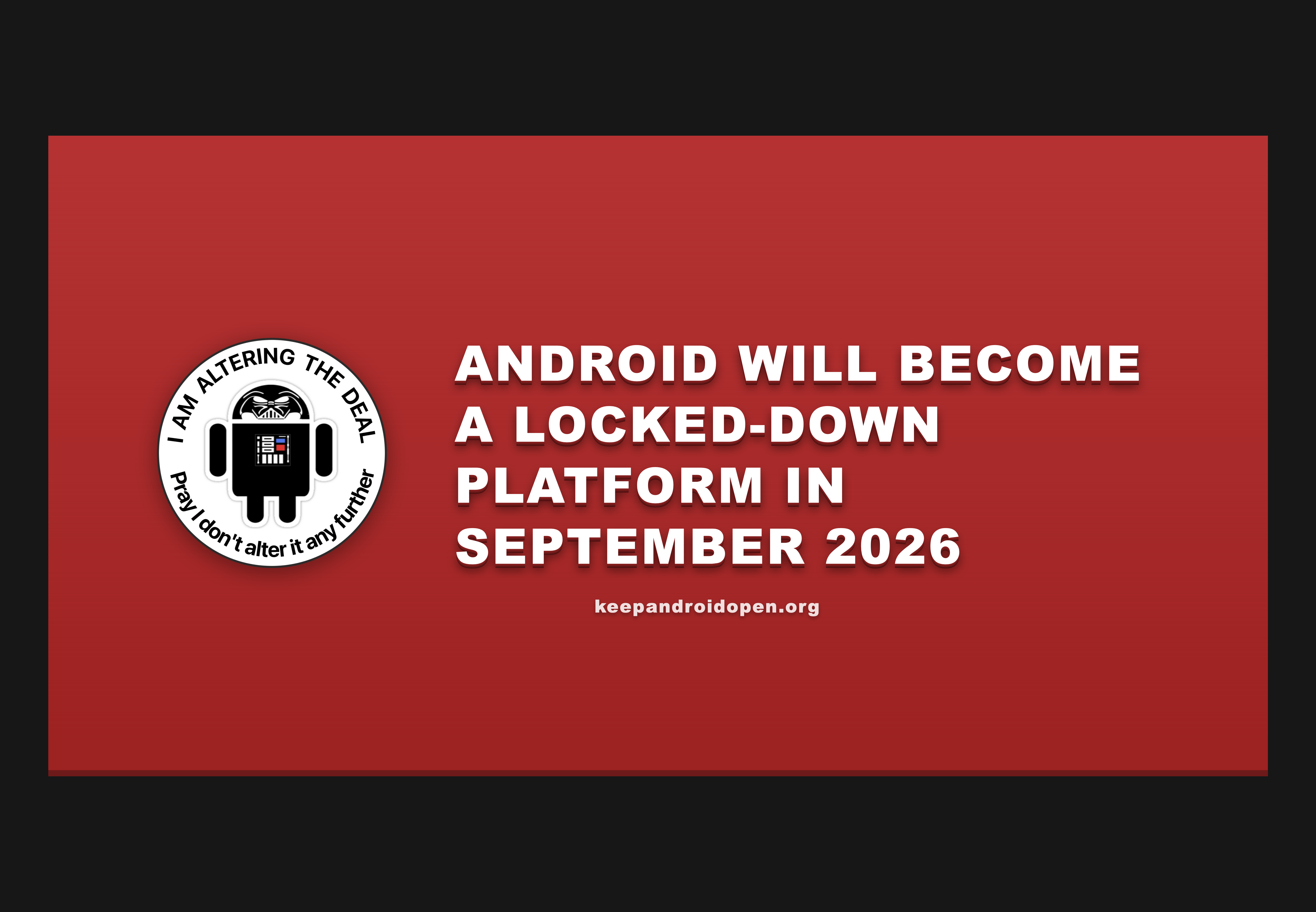
Your Phone Is About to Stop Being Yours: What the Keep Android Open Campaign Reveals
What Happened
A major campaign called Keep Android Open has sparked significant attention in tech communities, drawing over 1,474 upvotes on Hacker News. The campaign exposes a troubling trend: smartphone manufacturers (OEMs) and wireless carriers are systematically locking down device ownership, preventing users from repairing their own phones, installing custom software, or even accessing basic diagnostic tools.
The core issue is straightforward but profound. When you buy a smartphone, you assume you own it. In reality, manufacturers are increasingly treating devices as licensed products rather than owned property. Carrier locks, bootloader restrictions, proprietary repair ecosystems, and software lockdowns mean you cannot repair your own device without manufacturer permission—and often at premium costs.
This isn't just inconvenience. Users face situations where a cracked screen requires factory replacement rather than a simple repair. Battery replacements become manufacturer-exclusive services. Independent repair shops are shut out through legal threats and parts restrictions. The Keep Android Open campaign highlights these practices and calls for genuine consumer control over owned devices.
Why This Matters Now
This story taps into something deeper than consumer frustration. It intersects three powerful forces reshaping the tech industry: the right-to-repair movement, regulatory pressure from governments, and fundamental questions about device ownership in the digital age.
Regulatory bodies are taking action. The European Union has implemented right-to-repair mandates requiring manufacturers to provide spare parts and repair documentation. The U.S. Federal Trade Commission (FTC) has signaled strong enforcement intentions against repair restrictions. These aren't theoretical policies—they represent real business risk for hardware companies.
For founders and enterprises, this matters because device control directly impacts business operations. In fleet management, IoT deployments, and enterprise mobility, locked-down devices create dependency relationships that favor manufacturers over customers. A company managing 10,000 devices cannot accept being locked out of basic maintenance and diagnostics. Regulatory shifts are forcing this conversation from consumer forums into board rooms and legal departments.
The campaign also reflects changing consumer expectations. A generation of users now understands that software restrictions on hardware they purchased represent a loss of autonomy. This sentiment translates into regulatory pressure, which translates into policy mandates that affect how hardware companies can operate.
The Business and Regulatory Landscape
Hardware founders need to understand this shift concretely. Right-to-repair regulations are no longer fringe activism—they're becoming compliance requirements.
In the EU, the Digital Products Act and ecodesign regulations explicitly mandate repairability. Manufacturers must provide spare parts for years after product release. Documentation must be accessible. In the U.S., the FTC has publicly stated it will pursue companies that use software locks to prevent legitimate repair.
This affects multiple industries: IoT device manufacturers, fleet management companies, enterprise mobility providers, and anyone building hardware that customers expect to own and maintain. A startup building smart industrial equipment, for example, cannot rely on vendor lock-in as a business model. Customers will demand—and regulators will require—the ability to repair and maintain what they've purchased.
The Keep Android Open campaign specifically targets Android because it's supposed to be open. Yet in practice, device manufacturers layer restrictions that undermine Android's openness. This contradiction creates political and regulatory vulnerability. When a supposedly open platform becomes practically closed, regulators pay attention.
What This Means for Your Business
If you're building hardware products, especially in IoT, fleet management, or enterprise sectors, device ownership policies should be a strategic consideration, not an afterthought.
First, audit your current approach. Do you use software locks that prevent customer repairs? Do you restrict access to diagnostic tools? Do you require manufacturer approval for repairs? These practices may face regulatory challenges within 12-24 months.
Second, consider the competitive advantage of openness. Companies that enable customer ownership and repair build loyalty and reduce support costs long-term. This is especially true in enterprise markets where customers have leverage and regulatory awareness.
Third, engage with emerging standards. Right-to-repair isn't going away. Building compliance into product design now is cheaper than retrofitting later.
What You Can Do
For consumers, support right-to-repair advocacy. Vote with your purchases. Choose devices and manufacturers that respect ownership.
For enterprises, demand repairability and ownership terms in procurement. Make it a contract requirement. Your legal and compliance teams should already be tracking right-to-repair regulations in your operating markets.
For hardware founders, integrate repairability into product architecture. Provide documentation. Make spare parts available. Enable customer diagnostics. These aren't concessions—they're competitive advantages that align with regulatory direction.
The Keep Android Open campaign isn't just consumer activism. It's a signal that device ownership is becoming a regulated right, not a manufacturer privilege. Companies that recognize this shift early will thrive. Those that resist will face regulatory costs and market pressure.
The Bottom Line
Your phone is increasingly not yours—but that's changing. Regulators, consumers, and enterprises are demanding actual ownership of devices they purchase. The Keep Android Open campaign is part of a larger movement reshaping how hardware companies operate. Understanding and adapting to this shift isn't optional for hardware founders and enterprises managing large device fleets. It's essential strategy.
Now you know more than 99% of people. — Sara Plaintext
