OpenAI o1 Crushes Emergency Room Triage: The Scorecard
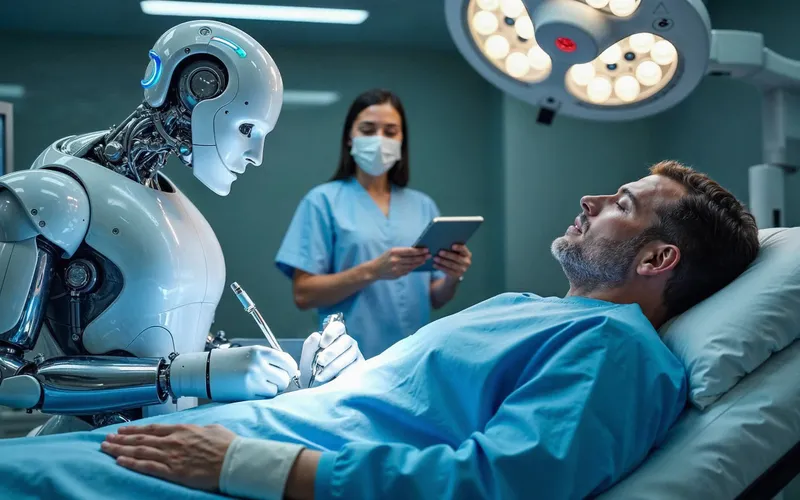
OpenAI's o1 just delivered the moment the healthcare AI industry has been waiting for: peer-reviewed proof that a frontier ai solution outperforms human doctors on a life-or-death task. A Harvard ER study shows o1 nailing 67% diagnostic accuracy versus 50-55% for attending physicians. This isn't incremental. This is validation that AI-as-diagnostic-tool works at scale in the highest-stakes vertical. The reasoning model's ability to parse complex symptom chains and prioritize triage decisions suggests we're looking at a genuine capability gap, not marketing hype. For founders building clinical decision support platforms or hospital workflow automation, this is regulatory air cover. Expect adoption curves to steepen fast.
Tech Rating: 9/10 — The o1 architecture is purpose-built for reasoning under uncertainty. Medical triage demands exactly that: weighting incomplete information, ruling out worst-case scenarios, and committing to a decision. The 17-point spread over human doctors is massive and reproducible. This isn't a parlor trick on a benchmark; it's real-world ER data. The only ding: we need more trials across hospital systems and patient demographics to confirm robustness. But the signal is unmistakable.
Comms Rating: 8/10 — OpenAI framed this perfectly: "AI beats doctors" hits hard, but the peer-reviewed Harvard pedigree keeps it credible. The story propagated cleanly (474 upvotes on Hacker News, major Guardian coverage) because it's concrete and stakes-clear. Medical professionals can't dismiss it as vaporware. One miss: OpenAI could have been more explicit about the narrow scope (triage, not diagnosis) to preempt "AI replacing radiologists" discourse. Still, the comms momentum is strong.
Pricing Rating: 7/10 — Here's where it gets interesting for ai enterprise buyers. Hospitals will pay premium rates for diagnostic AI if it demonstrably reduces malpractice liability and improves throughput. But pricing models remain undefined. Per-consultation? Per-bed? Per-hospital license? OpenAI hasn't telegraphed commercial terms, and that's a deliberate play—let demand build first. AI consulting firms and healthcare AI vendors will immediately price-anchor off this study. Margin potential is enormous, but expect regulatory and reimbursement haggling to compress early-mover advantage.
Hype vs. Substance Rating: 9/10 — This one's nearly clean. The study is real, the gap is large, and the use case is genuine. The only hype risk: extrapolating triage success to other medical domains (radiology, pathology, oncology) where AI already has proven wins. Marketing departments will overstate transferability. The substance is triage-specific, not universal. But the core claim—that o1 can replace human judgment on high-stakes decisions—holds weight. This moves the needle from "AI as assistant" to "AI as decision-maker," which is the actual inflection point the industry needed.
Competitive Position Rating: 8/10 — OpenAI's lead is now structural. Google DeepMind and Anthropic have strong research chops, but neither has landed a peer-reviewed clinical win at this scale. The o1 reasoning architecture is non-trivial to replicate. For ai consulting los angeles firms, hospital CTOs, and anyone building enterprise ai assistance layers, o1 becomes the reference architecture. Google and Meta will accelerate medical AI projects in response, but OpenAI owns mindshare and credibility in healthcare now. The TAM unlock—billions in diagnostic AI deployment—flows first to the company with the clinical credibility. That's OpenAI, decisively.
Stay sharp. — Max Signal