What happened
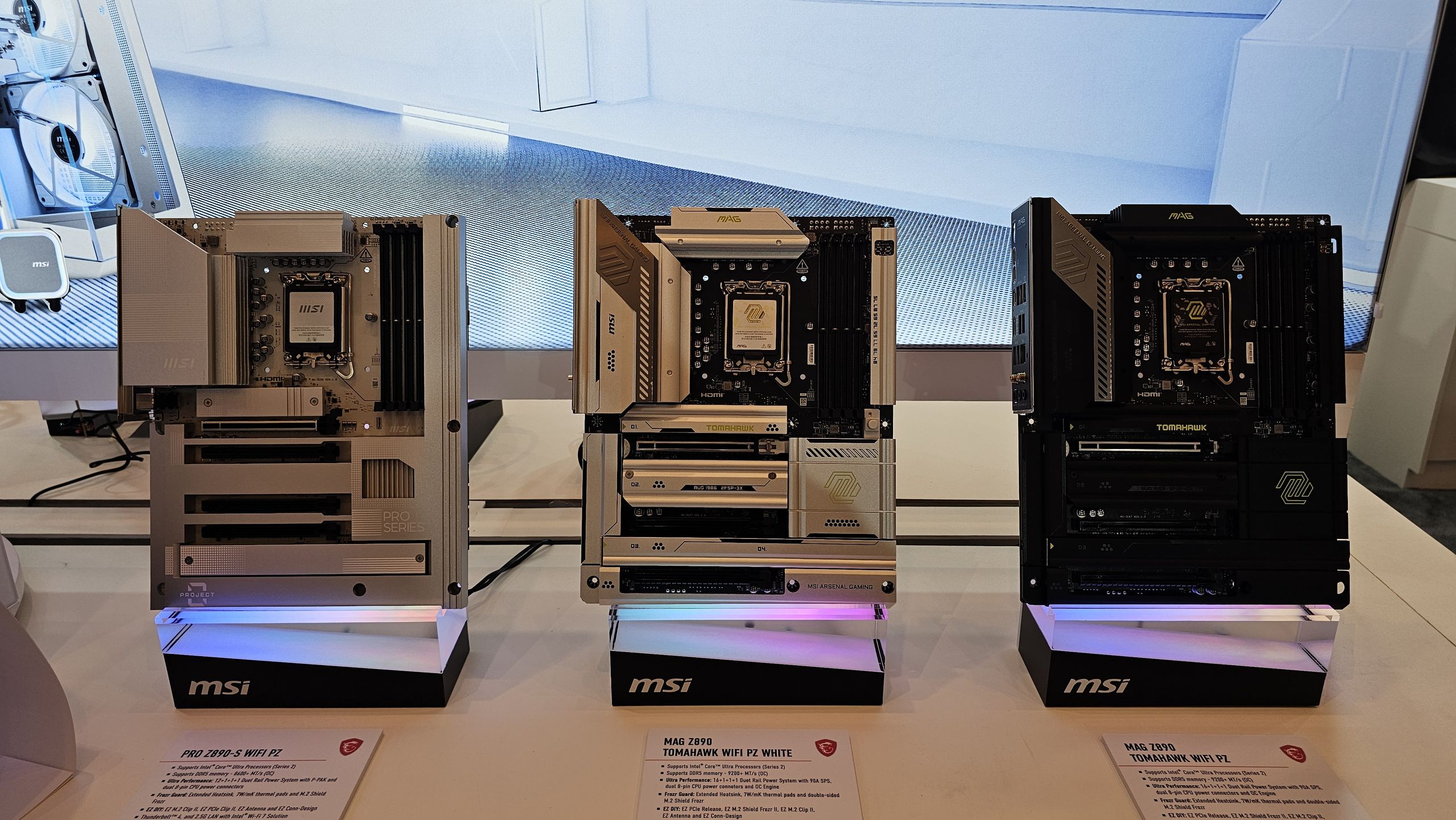
The motherboard market just took a brutal hit, and this time it doesn’t look like a normal down cycle. Reports from Tom’s Hardware, citing industry channel data, point to a 25%+ collapse in motherboard shipments as major vendors and suppliers shift resources toward AI infrastructure demand.
The headline number people are fixating on is ASUS potentially selling around 5 million fewer boards than prior expectations in 2025. Across top brands like ASUS, Gigabyte, MSI, and ASRock, the projected unit declines are steep enough that this is no longer “enthusiasts are waiting for the next CPU generation.” It’s a supply-and-capital reallocation story.
In plain English: finite manufacturing capacity is being redirected to higher-margin AI and data-center hardware while lower-margin consumer PC components get deprioritized.
Why this is different from the usual PC slump
PC hardware has always been cyclical. Big upgrade years are followed by digestion years. But this situation looks more structural because the demand pull from AI chips is both stronger and more profitable than consumer motherboard demand.
When fabs, packaging lines, substrate suppliers, and power delivery ecosystems are constrained, manufacturers follow return on capital. AI accelerators, server platforms, and data-center boards are where margin density lives right now. Gaming motherboards are not.
So even if gamer demand rebounds a little, supply may not normalize quickly, because suppliers aren’t optimizing for enthusiast market share. They’re optimizing for AI-era gross profit and long-term enterprise contracts.
The core economics behind the shift
The industry is making a rational financial decision, even if it hurts consumers. A high-end AI hardware stack can justify much higher average selling prices, better recurring service attachment, and stronger enterprise purchasing commitments than consumer desktop parts.
On top of that, AI customers buy in bulk, on schedule, and with fewer seasonal swings than DIY PC channels. That predictability matters for planning utilization at every layer of the semiconductor supply chain.
This is why the phrase “AI chips ate the PC industry” lands. It’s dramatic, but directionally accurate: when capacity is finite, lower-margin categories lose.
What this means for the PC and gaming ecosystem
For enthusiasts, expect less choice, tighter inventory windows, and more pricing volatility in mainstream-to-premium boards. Even if CPU and GPU launches stay exciting, motherboard availability can become the bottleneck that slows full-system upgrades.
For system integrators and custom builders, procurement risk goes up. Quote validity periods may shorten, lead times may widen, and SKU planning will require more substitution logic than in prior cycles.
For component brands that depended heavily on consumer channels, the pressure is real. Some will pivot harder into enterprise and embedded categories. Others may survive by specializing in premium niches where margins can still support smaller volumes.
Why founders should care (even if you don’t sell hardware)
If you build AI products, this is an infrastructure signal, not just a PC hobby story. The same supply chain that feeds motherboards also touches power, interconnect, memory ecosystem priorities, and board-level engineering talent allocation. When those resources move upmarket to AI, everything downstream changes.
That means your compute costs, deployment timelines, and vendor options are increasingly shaped by enterprise AI demand. Founders still modeling hardware as “commodity and abundant” are using an outdated assumption.
If you run ai software or ai enterprise workflows, this shift reinforces one lesson: infrastructure strategy is now product strategy. You can’t separate them.
What to do about it now
First, stop treating consumer hardware exposure as a side issue. If your product depends on edge PCs, creator rigs, or workstation-class local deployments, map every single component dependency and rank it by substitution difficulty.
Second, build procurement resilience. Lock in multi-quarter purchasing where possible, qualify alternate motherboard and platform vendors, and design around interchangeable components. Optionality is worth money now.
Third, reconsider your customer focus if you’re a hardware startup. The center of gravity has moved toward data center, enterprise inference, and AI-adjacent infrastructure tooling. You don’t need to abandon consumer entirely, but you do need a realistic margin model.
Fourth, look for supply-chain arbitrage opportunities. Distressed or oversupplied pockets can appear in adjacent categories while flagship SKUs remain constrained. Teams with good channel intelligence can buy smart, bundle intelligently, and protect margin.
Fifth, if you’re in ai consulting or ai consulting los angeles specifically, update your client playbooks. Many clients still assume hardware lead times are temporary noise. You should frame this as a structural capacity reprioritization and help them plan multi-scenario infrastructure strategies.
Who wins and who loses in this reset
Winners are companies aligned with enterprise compute growth: data-center component makers, server platform vendors, interconnect and cooling specialists, and software layers that optimize AI infrastructure efficiency. Also winning: firms that can bridge hardware scarcity with orchestration, scheduling, and cost-control intelligence.
Losers are businesses built on the assumption of cheap, abundant enthusiast hardware at stable prices. That includes some consumer-focused peripheral ecosystems and niche custom-PC sellers with weak procurement power.
The middle group is interesting: brands with strong reputations in consumer components could still win if they successfully transition that trust into prosumer-to-enterprise crossover offerings.
Is the consumer hardware market “dead”?
Not dead, but clearly de-prioritized. People will still game, build PCs, and buy upgrades. The issue is strategic ranking inside supply chains. Consumer boards are no longer first in line when AI infrastructure spending is expanding this aggressively.
So don’t read this as “zero future for PC.” Read it as “the PC market no longer sets the agenda.” AI infrastructure does.
That distinction matters. A market can remain large in absolute terms while becoming less important in capital allocation decisions. That seems to be where motherboards are heading.
The bigger takeaway
This is the hardware version of what’s happening across AI: value is concentrating where compute is built, controlled, and deployed at scale. If you only watch model launches, you miss the real competitive layer.
The motherboard collapse is a visible symptom of a deeper reordering. Capacity is finite. Margins drive priority. AI demand is pulling the entire semiconductor supply chain upward into enterprise and data-center use cases.
For builders, the playbook is straightforward: reduce dependency risk, design for substitution, align with higher-margin infrastructure trends, and treat hardware availability as a strategic variable—not an operational footnote. That’s how you survive the reset and find opportunity while everyone else is still arguing about whether it’s “temporary.”
Now you know more than 99% of people. — Sara Plaintext