The headline is dramatic, but the builder takeaway is simple: if you’re already on the previous Claude stack, this is not a “flip one switch and celebrate” upgrade. It’s a controlled migration to a higher-capability security model, with tighter access assumptions and a bigger blast radius if your guardrails are loose.
Introducing Project Glasswing: an urgent initiative to help secure the world’s most critical software.
— Anthropic (@AnthropicAI) April 7, 2026
It’s powered by our newest frontier model, Claude Mythos Preview, which can find software vulnerabilities better than all but the most skilled humans.https://t.co/NQ7IfEtYk7
My read after this announcement: treat Project Glasswing as a deployment model, not just a model launch. Anthropic is signaling that capability jumped fast enough that rollout strategy now matters as much as raw quality.
What changed in one line
You’re moving from a broadly used prior model (for many teams, Opus 4.6-era workflows) to Claude Mythos Preview, a restricted frontier model tuned by general capability gains that now perform much better on vulnerability discovery and exploit reasoning tasks.
Before touching production, assume three things are different: model identifier, safety behavior under security prompts, and token burn profile from longer autonomous runs.
Step 1: Confirm the model ID and access gate before any config edits
- Verify your account actually has Mythos Preview access. Do not edit config first and “hope it works.”
- Find the exact model string in your Anthropic console or org docs.
- Keep a rollback alias pointing at your previous stable model so you can revert in minutes.
{
  "models": {
    "primary": "claude-mythos-preview",
    "rollback": "claude-opus-4.6",
    "default": "claude-opus-4.6"
  }
}
If Anthropic exposes a different canonical ID in your environment, use that exact value. Don’t invent near-matches; one character off can silently route traffic to a fallback model and poison your test results.
This second embed is where the technical story matters more than the launch hype: benchmark deltas and real vuln workflow evidence are the reason to consider upgrading at all.
A statement from Anthropic CEO, Dario Amodei, on our discussions with the Department of War.https://t.co/rM77LJejuk
— Anthropic (@AnthropicAI) February 26, 2026
My reaction: the meaningful signal is not “new model exists,” it’s “security task success rates and autonomous depth improved enough to change pipeline design.”
Step 2: Make minimal, reversible settings.json/config edits
- Change only model selection first. Leave temperature, tool permissions, and retry logic untouched for pass one.
- Add per-task routing so security analysis jobs can use Mythos while general assistant traffic stays on your current model.
- Pin deterministic settings for regression tests (same prompts, same tool limits, same seeds where supported).
{
  "llm": {
    "default_model": "claude-opus-4.6",
    "routes": {
      "security_audit": "claude-mythos-preview",
      "general_chat": "claude-opus-4.6",
      "code_review_high_risk": "claude-mythos-preview"
    },
    "max_tokens": 8192,
    "temperature": 0.2
  }
}
Keep this phase boring. Most upgrade pain comes from changing five things at once, then not knowing what caused a regression.
Step 3: Expect these breaking changes and gotchas
- Longer autonomous chains: Mythos-style security reasoning may run deeper, which can trigger timeout ceilings in old worker configs.
- More tool calls per task: If your orchestration assumes “one answer, minimal tool use,” you may hit rate limits or queue pressure.
- Different refusal/allow boundaries: Security prompts that passed on prior models may now be blocked, transformed, or require tighter context framing.
- Higher sensitivity to sloppy prompts: Vague “find bugs” prompts can produce noisy findings unless you enforce target scope and severity criteria.
- False confidence risk: Better exploit reasoning can make bad output sound extremely plausible. Mandatory human verification still applies.
Practical fix: pre-define strict prompt templates for vulnerability class, impact threshold, required proof artifacts, and expected remediation format.
This third embed is the “operational caution” checkpoint. The model is more capable, yes, but you only benefit if triage and disclosure workflows are mature enough to absorb what it finds.
A statement on the comments from Secretary of War Pete Hegseth. https://t.co/Gg7Zb09IMR
— Anthropic (@AnthropicAI) February 28, 2026
My take: upgrading model capability without upgrading process is how teams create their own incident queue.
Step 4: Cost impact (what usually surprises teams)
Even if token pricing were unchanged, your real spend can rise because high-skill security workflows tend to use more context, more iterative runs, and more verification passes. In other words: cost per successful finding is the metric that matters, not cost per raw request.
- Track tokens per validated issue, not tokens per call.
- Cap exploratory loops in staging first.
- Use two-pass routing: cheap model for broad triage, Mythos for high-confidence candidates.
- Set budget guards per repository or service tier.
{
  "budget_controls": {
    "daily_token_cap": 2500000,
    "per_task_cap": 120000,
    "escalation_rule": "only escalate to claude-mythos-preview after medium+ confidence signal"
  }
}
If you skip budget controls, you can get excellent findings and still lose the business argument because finance sees a sudden spend spike with no attribution.
Step 5: When you should NOT upgrade yet
- You don’t have access to the preview tier and would be shipping blind with fallback behavior.
- Your current pipeline lacks reproducible test harnesses, so you can’t measure quality delta honestly.
- You have no staffed triage window for increased vulnerability volume.
- You operate in a tightly regulated environment where preview-model policy is not yet approved.
- Your top pain is basic hygiene (dependency lag, secret leaks, CI gaps), not deep vuln discovery.
In those cases, stabilize fundamentals first, then upgrade. Better model + weak process = expensive chaos.
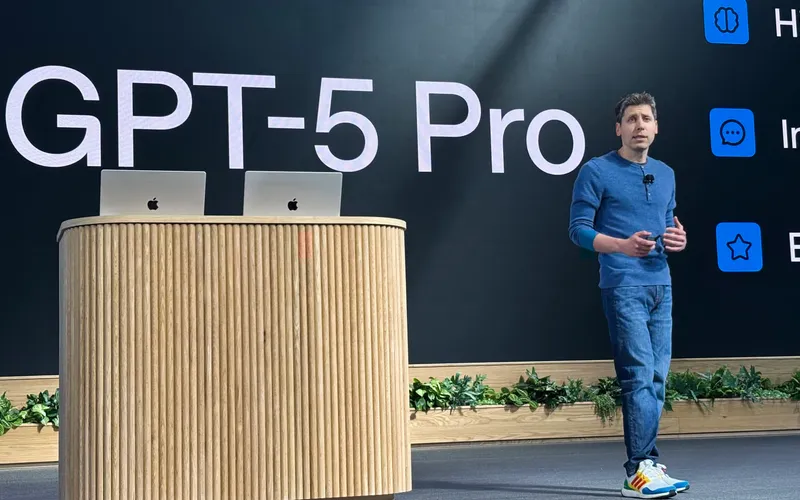
This final embed matters because it shows this is an industry-wide trajectory, not a one-lab anomaly: frontier models are climbing cyber capability curves quickly, and labs are adapting rollout and safeguards in parallel.
Introducing GPT-5.5
— OpenAI (@OpenAI) April 23, 2026
A new class of intelligence for real work and powering agents, built to understand complex goals, use tools, check its work, and carry more tasks through to completion. It marks a new way of getting computer work done.
Now available in ChatGPT and Codex. pic.twitter.com/rPLTk99ZH5
Bottom line: do the Mythos upgrade if you can measure it, constrain it, and roll it back quickly. Don’t do it as a vanity migration. The teams that win here are the ones that pair model gains with disciplined config, clear routing, and ruthless operational guardrails.
Now you know more than 99% of people. — Sara Plaintext