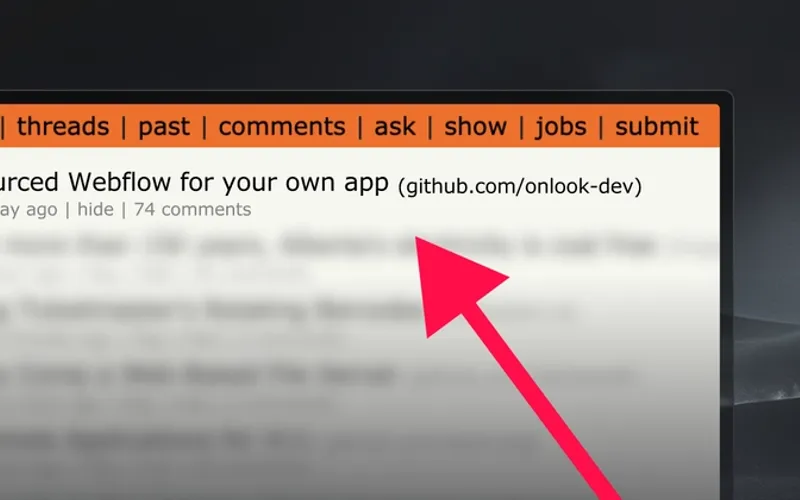
Show HN: Needle: We Distilled Gemini Tool Calling into a 26M Model
The absolute audacity of taking Google's hulking Gemini model and fitting its tool-calling magic into a 26-million-parameter lightweight is giving us major David-versus-Goliath energy. This is the kind of technical flex that makes you wonder why we even need the bigger models in the first place. Needle isn't just a distilled model—it's a wake-up call that maybe all those massive parameters were doing some heavy lifting we didn't actually need.
What's genuinely clever here is the execution. The team managed to capture the tool-calling behavior—arguably one of the most useful features of modern LLMs—without requiring a data center's worth of GPU memory. For developers working with edge devices, mobile deployments, or basically anyone tired of cloud API bills, this is a legitimate game-changer. The 624 upvotes and community engagement suggest people are genuinely excited about the implications.
The only catch? This kind of distillation is incredibly hard to pull off, which is why not everyone's doing it. But if it works as advertised, Needle could unlock a whole category of lean, mean AI applications that were previously locked behind the paywall of expensive inference. It's the kind of project that reminds us that sometimes the real innovation isn't about building bigger—it's about building smarter.
Rating: 8.5/10 — Technically impressive, practically useful, and refreshingly contrarian in a field obsessed with scale.
Building a safe, effective sandbox to enable Codex on Windows
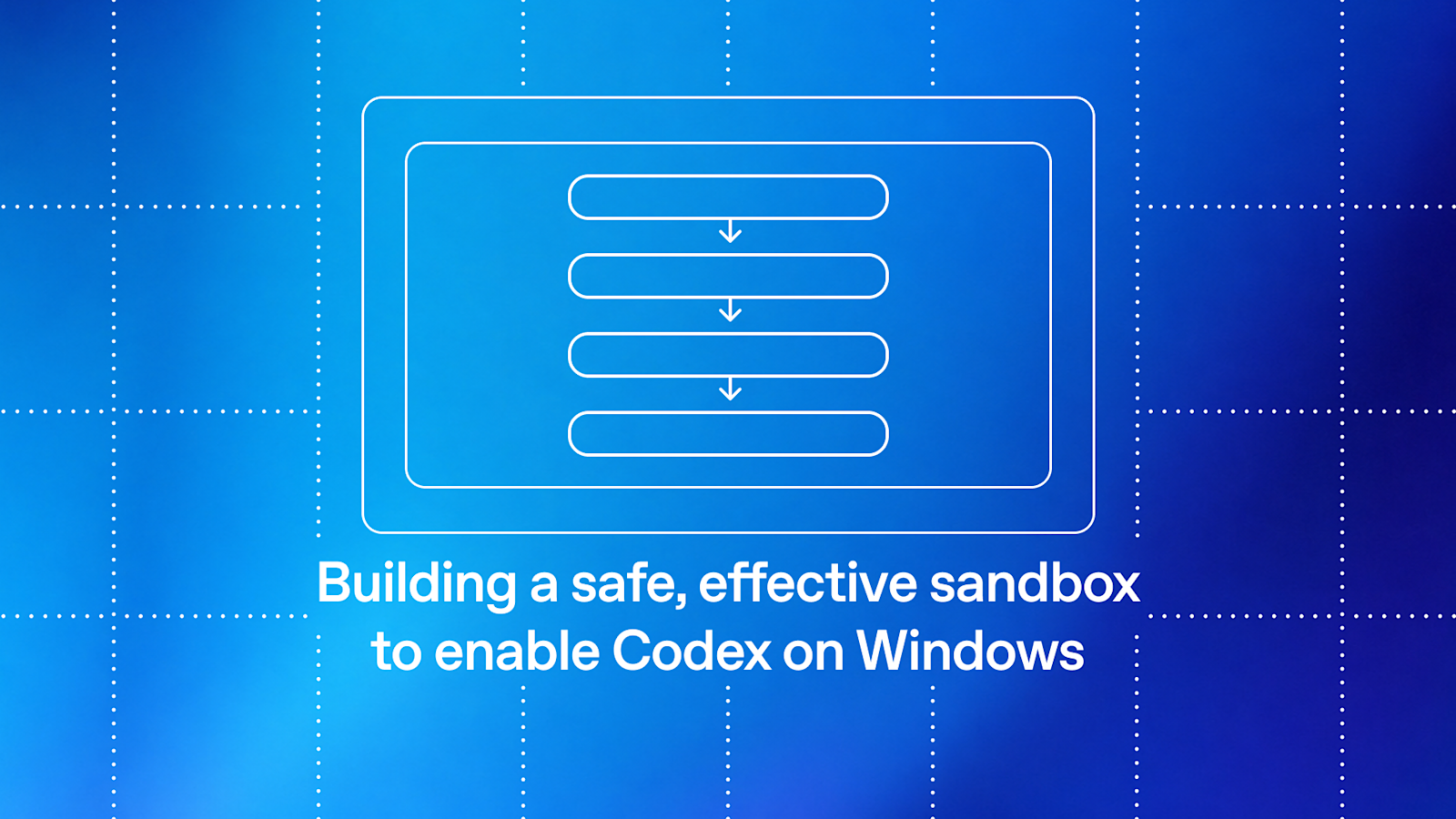
OpenAI just dropped a technical deep-dive about sandboxing Codex on Windows, and honestly? It's the kind of unglamorous engineering work that actually matters. While everyone's obsessing over ChatGPT's latest antics, the folks at OpenAI are over here solving the genuinely hard problem: how do you let an AI code generator loose without it accidentally deleting your entire hard drive or running malicious commands? Spoiler alert: it requires some serious architectural gymnastics.
The sandbox concept itself is beautifully simple in theory—isolate the AI's code execution environment so it can't touch your actual system. But in practice? You've got to wrangle Windows security models, handle file system permissions, manage process isolation, and somehow keep performance from tanking while doing all this. The post walks through their approach with the kind of technical rigor that makes you appreciate why shipping AI tools safely is basically an engineering arms race.
What's genuinely impressive is that they're publicly sharing this. Most companies would lock this knowledge away like it's the nuclear launch codes. Instead, OpenAI's essentially saying "here's how we stopped Codex from becoming a chaos agent on your machine"—which, in an industry prone to security theater, feels refreshingly honest. It won't make headlines, but it's the kind of work that prevents disasters.
Rating: 8/10 for practical importance and transparency, minus points for being technical enough to make most people's eyes glaze over.
How finance teams use Codex

OpenAI's Codex is basically the autocomplete that makes spreadsheet jockeys feel like wizards. While most of us are still manually typing formulas like it's 1995, finance teams are apparently letting AI write their code snippets and automate the mind-numbing stuff. The real tea? It frees up time from busywork so humans can do what they're actually paid for—strategy, analysis, and looking busy in meetings.
What's genuinely interesting here is that Codex isn't replacing finance teams; it's giving them superpowers. It's handling the boilerplate code generation, data transformation, and API integration work that would normally eat up hours. For teams drowning in technical debt and manual processes, this is like hiring a tireless junior developer who never complains about the coffee situation.
The catch? You still need people who understand what they're asking the AI to build. Garbage in, garbage out applies here too. But for finance operations that can actually leverage it properly, Codex is legitimately a productivity multiplier. It's not flashy or revolutionary, but it's the kind of practical efficiency gain that actually moves the needle on quarterly goals.
AutoScout24 scales engineering with AI-powered workflows
AutoScout24 figured out what every scaling engineering team dreams about: getting more done without hiring an entire battalion of developers. By integrating AI into their workflows, they've essentially given their engineers superpowers—the kind where you can review code, write documentation, and catch bugs while simultaneously enjoying your coffee. It's the closest thing to cloning your best engineers without the ethical minefield.
The real magic here isn't just "we used AI and stuff got faster." It's that they're letting their humans focus on the creative, architectural decisions that actually matter, while AI handles the repetitive grunt work. That's the dream, right? Less time arguing about formatting rules and more time building things that make cars easier to buy and sell. When a platform handling millions of vehicle listings can move faster and smarter, everybody wins—especially the engineers who suddenly have breathing room in their sprint cycles.
The implementation shows maturity too. This isn't a "we threw ChatGPT at everything and called it innovation" situation. They've thoughtfully woven AI into their actual processes—code review, documentation, testing workflows. That's the difference between a gimmick and a genuine operational upgrade. If you're managing an engineering team at scale, this is exactly the kind of case study that should be making you reconsider how your workflows could work harder for you.
Rating: 8.5/10 — Smart execution on a real problem, with clear practical value. Bonus points for showing it's not about replacing engineers, it's about letting them do their best work.
What Parameter Golf taught us about AI-assisted research

OpenAI's "Parameter Golf" is basically the AI equivalent of trying to fit into your high school jeans—you're obsessed with doing more with less, and somehow it actually works. The researchers discovered that you can squeeze impressive performance out of smaller models by tuning parameters like learning rate and batch size with surgical precision. It's the kind of nerdy optimization work that doesn't sound thrilling until you realize you're getting GPT-3-adjacent results from a model that won't bankrupt your startup.
What makes this genuinely clever is that it flips the narrative on the AI arms race. Everyone's obsessing over who can build the biggest model, but Parameter Golf proves that technique and thoughtful tuning can be just as valuable as throwing more compute at the problem. It's the research equivalent of a indie band outplaying stadium rock with better songwriting—efficiency beats brute force when you actually know what you're doing.
The practical takeaway? If you're building AI applications, you don't necessarily need the flashiest model or the deepest pockets. Smart parameter tuning could mean the difference between a sustainable operation and a venture-capital hamster wheel. For researchers and developers watching their compute budgets like hawks, this is basically a permission slip to be clever instead of just bigger. Rating: 7/10—solid, practical research that deserves more hype than it gets.
How NVIDIA engineers and researchers build with Codex
NVIDIA's love affair with OpenAI's Codex is basically a tech power couple showing off their productivity gains, and honestly? It's kind of inspiring. Engineers are using AI to write boilerplate code faster than you can say "copy-paste is dead," which means they're actually spending time on the gnarly stuff that requires human brains. The real flex here is watching a company that literally builds the chips making the AI work, then use that AI to build better chips. It's recursive excellence.
What makes this story sing is the honesty about where Codex actually helps versus where it's just a fancy autocomplete. NVIDIA teams aren't treating it like magic—they're treating it like a junior engineer who's fast but needs oversight. Code reviews still happen. Logic still needs human verification. It's refreshingly unglamorous, which means it's probably real.
The takeaway? AI coding assistants aren't about replacing engineers; they're about letting engineers spend less time on the tedious stuff and more time on the architecture that actually matters. For a company betting its future on AI acceleration, walking the walk instead of just talking about it is the move. Rating: 8/10 — solid implementation story that doesn't oversell the hype.
The new AI-powered Google Finance is expanding to Europe.

Google bringing its AI-powered Google Finance to Europe is one of those launches that looks “incremental” until you realize it quietly rewires how retail investors do research. Local-language AI answers, Deep Search, technical chart overlays, live earnings transcripts, and instant highlights in one place is a serious upgrade from tab-juggling across five sketchy finance sites.
The big win here is speed-to-understanding. If this thing can explain market moves, surface key moments on charts, and summarize earnings calls without hallucinating nonsense, it turns finance research from a weekend project into a 10-minute workflow. That’s not just convenience—that’s a behavior shift.
My rating: 8.9/10 for practical impact, with a giant asterisk on accuracy and source transparency. If Google nails trust and consistency, this becomes default investor infrastructure in Europe fast; if it fumbles, it’s just a prettier way to be confidently wrong.
See what happens when creative legends use AI to make ads for small businesses.

Google handing ad legends unlimited access to Flow to build campaigns for small businesses is a smart flex: “AI won’t kill creativity, it’ll scale taste.” The Small Brief is basically a live demo of what happens when elite creative direction meets tools that remove production drag.
The part I like is the framing. This isn’t “replace agencies with prompts,” it’s “give great creatives rocket fuel and let small brands borrow big-brand firepower.” If the June campaign reveals actually convert, this could be one of the clearest proofs yet that AI ad tooling can move from novelty clips to real business outcomes.
Hot-take rating: 8.7/10 right now, with upside to 9.2/10 if the final work shows measurable lift and not just pretty case-study edits. Either way, this is entertaining and strategically sharp: Google is turning AI skepticism into a before-and-after reel.
5 gardening tips you can try right in Search

Google just decided that Search needed to become your personal gardening coach, and honestly? It's a vibe. Instead of clicking through seventeen listicles written by people who've never touched soil in their lives, you can now get gardening tips directly in the search results. Five tips, right there, no excavation required. It's the kind of feature that makes you wonder why it took this long—like discovering your phone has had a flashlight the whole time.
The real play here is Google doing what Google does best: making information frictionless. Why bounce between sites when you can get the goods instantly? Whether you're trying to save your sad tomato plant or finally understand why your herbs keep staging a mutiny, having quick tips embedded in Search is genuinely useful. It's the kind of small feature that quietly improves your day without asking for much in return.
Rating: 7/10. Smart feature, solid execution, genuinely helpful for the casual gardener. Points deducted only because we're still waiting for Google to integrate a way to actually *do* the gardening for you. That's the real innovation we need.
Google is partnering with XPRIZE and Range Media Partners on the $3.5 million Future Vision film competition.

Google just threw $3.5 million at a film competition because apparently they haven't spent enough money on things this year. But honestly? This is kind of genius. They're partnering with XPRIZE and Range Media Partners to find the next generation of filmmakers who can actually imagine what AI futures might look like—without just recycling the "evil robot overlord" trope for the millionth time. It's like they're crowdsourcing the creative department's job while also getting free PR.
Here's the thing: most people's understanding of AI comes from sci-fi movies, so having Google bankroll a competition to shape that narrative is either brilliantly forward-thinking or hilariously self-serving. Probably both. The "Future Vision" competition could genuinely inspire some incredible storytelling about AI's potential, or it could just be a bunch of well-intentioned short films that nobody outside the film festival circuit will ever see. Either way, it's refreshingly ambitious compared to the usual corporate "we care about responsibility" lip service.
Rating: 7/10. Props for putting real money behind creative vision. Deductions for the obvious optics play and the nagging feeling this is partly about controlling the narrative. But if it gets even one legitimately great film about AI's future out of the deal, it's money well spent.
Stay sharp. — Max Signal