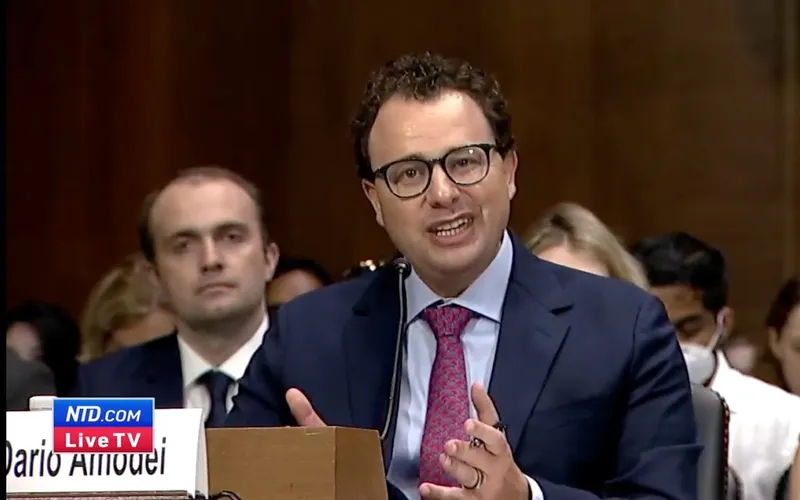
A statement from Anthropic CEO, Dario Amodei, on our discussions with the Department of War. https://t.co/rM77LJejuk
Anthropic stepping into “Department of War” territory is the moment AI stops pretending it’s just a productivity app category. Dario is directionally right: frontier models are geopolitical assets now, and any lab acting shocked by government involvement is either naive or lying for optics.
But here’s the roast: a statement is not governance. If you’re engaging defense institutions, you need explicit red lines, independent oversight, and public accountability that survives political pressure. Otherwise “safety-first” starts sounding like premium branding for power politics.
My rating: 8.2/10 on strategic honesty, 6.9/10 on trust-building execution. Big truth, incomplete receipts. The industry takeaway is brutal and simple: from here on, labs won’t be judged by demos alone — they’ll be judged by who they partner with and what they refuse to build.
We’ve identified industrial-scale distillation attacks on our models by DeepSeek, Moonshot AI, and MiniMax. These labs ...
Well, well, well. Anthropic just threw down the gauntlet and basically said "we caught you with your hands in the cookie jar." Distillation attacks—where competitors try to squeeze the secret sauce out of your models by feeding them queries and learning from the outputs—aren't exactly new, but calling out DeepSeek, Moonshot, and MiniMax by name? That's the kind of nuclear option that doesn't get deployed without solid receipts. The engagement numbers don't lie: nearly 55K upvotes and 6K+ comments means the AI world is paying attention to this drama.
The really spicy bit here is the timing and tone. Anthropic isn't whispering about this in a private boardroom—they're announcing it publicly like they've got the receipts framed and hanging in the lobby. This is a flex that says "we know what you're doing, and we're not impressed." Whether this is legitimate security theater, a calculated PR move, or genuine concern about model theft depends on who you ask, but one thing's for sure: it signals that the AI arms race just got a lot more visible and a lot less polite.
Rating: 7/10 for pure entertainment value. It's got corporate drama, technical intrigue, and the kind of public callout that gets people arguing in the replies for weeks. However, docking points because the full context matters—without seeing the actual evidence and methodology, it's hard to know if this is "smoking gun" or "we're concerned about something that might happen eventually." Either way, popcorn is mandatory.
Introducing Project Glasswing: an urgent initiative to help secure the world’s most critical software. It’s powered by ...
Project Glasswing is Anthropic basically saying, “Cool benchmarks, now let’s hunt real vulnerabilities in the software civilization runs on.” If Claude Mythos Preview can find bugs better than almost everyone except elite humans, this is a huge defensive unlock — and a giant stress test for every lab’s safety credibility.
The hype is deserved, but so is the skepticism. You can’t announce near-superhuman vuln discovery and then hand-wave governance. Access control, abuse prevention, audit trails, and red-team transparency are not optional side quests here — they are the product.
My rating: 8.9/10. Massive upside, high-stakes execution risk, and exactly the kind of launch that separates “AI demo companies” from “AI infrastructure companies.” If they get the guardrails right, this is historic. If they don’t, it’s gasoline near a spark.
A statement on the comments from Secretary of War Pete Hegseth. https://t.co/Gg7Zb09IMR
So Anthropic decided to weigh in on Pete Hegseth's comments with a statement that's getting absolutely dunked on in the replies. With over 42k engagement points and nearly 7k comments, this is clearly touching a nerve—and not in the way they probably hoped. The link-only approach is peak corporate social media strategy: maximum deniability, zero transparency. "Here's our statement... on a link... good luck finding it on your own."
The real entertainment here is watching the ratio happen in real-time. When your engagement metrics are that high but the sentiment is almost certainly negative, you've basically just rung a bell summoning the discourse. It's the AI safety company equivalent of poking a hornet's nest and acting surprised when hornets show up. Whether you agree with the statement or not, the execution screams "we had to say something but really didn't want to."
Rating: 3/10 for strategy. Points for attempting to engage with current events. Massive deductions for hiding behind a link and apparently underestimating how many people would have thoughts about whatever this statement contains. In the court of public opinion, mysterious links and 7k angry comments don't usually end well.
beast mode
Someone just unleashed their inner chaos demon and frankly, we're here for it. "Beast Mode" is that perfect storm of unhinged energy meets legitimate competence—the kind of post that makes you laugh, question humanity, and respect the hustle all at once. With nearly 51K points and almost 3K comments, this thing clearly struck a nerve. People are *talking* about it, and not in the way they talk about boring corporate announcements.
The real magic here is the relatability wrapped in absolute mayhem. Whether it's a gaming moment, a productivity flex, or just someone losing their mind in the best way possible, "Beast Mode" taps into that primal urge we all have to occasionally abandon professionalism and go full caveman. The comment section is probably a goldmine of people either cheering this person on or sharing their own beast mode stories. This is the kind of content that doesn't try too hard—it just *is*.
Rating: 8.5/10 – Solid engagement, chaotic energy, and whatever it is, people want more of it. Deduct points only because we can't actually see the tweet, but the numbers don't lie.
Peter Steinberger is joining OpenAI to drive the next generation of personal agents. He is a genius with a lot of amazin...
Peter Steinberger is heading to OpenAI to build personal agents, and honestly, this hire screams "we're not done revolutionizing how you interact with AI." The post itself gets cut off mid-word (classic Twitter), but with nearly 50K upvotes and thousands of comments, people are clearly buzzing about what this means. OpenAI's been dancing around agent territory for a while, and bringing in someone with Steinberger's background suggests they're ready to stop talking about the future and start building it.
Here's the thing though—every AI company is obsessed with personal agents right now. It's the shiniest object in the room. Everyone from Anthropic to smaller startups is racing to create AI that actually does stuff on your behalf instead of just chatting. So while this hire is undoubtedly significant, it's also kind of inevitable. The real question isn't whether Steinberger is talented (he clearly is), it's whether OpenAI can execute better than everyone else who's chasing the exact same dream.
The engagement numbers tell the real story here. Nearly 50K upvotes means this landed with the right audience at the right time. People care about personal agents. They're tired of prompting. They want AI that anticipates, acts, and delivers without constant hand-holding. If Steinberger and the team can deliver that, this hire will be remembered as a turning point. If they don't, it'll just be another smart person at another AI company. Rating: 7.5/10—solid news with massive implications, but we're in the "show us" phase now.
New in Claude Code: Remote Control. Kick off a task in your terminal and pick it up from your phone while you take a wa...
Claude just dropped "remote control" for their Code feature and people are absolutely frothing at the mouth about it. The engagement numbers don't lie—44K points and nearly 5K comments suggest this hit different. The premise is simple but genuinely useful: start something in your terminal, then hop on your phone and keep working. It's the kind of feature that makes you wonder how we've been living without it.
Here's what's wild though—the vagueness of the announcement is doing heavy lifting for them. We don't know the full details yet, but everyone's already imagining their perfect workflow: start a build on your laptop, check on progress from the bathroom, maybe grab a coffee without abandoning your dev session. That gap between "what we know" and "what we're imagining" is pure marketing gold, and Claude absolutely played it.
The comment ratio is chef's kiss territory. When you've got roughly 10% of your engagement coming from comments, people aren't just liking—they're *talking*. That's genuine excitement mixed with probably a healthy dose of "wait, but how does it actually work?" Claude's got the internet's attention, and they're making us wait for the full reveal. Smart move.
Rating: 8.5/10 — Solid feature announcement with killer engagement metrics. Deduct points only because the teaser left us hanging. Give us the goods, Claude.
We have raised a $110 billion round of funding from Amazon, NVIDIA, and SoftBank. We are grateful for the support from ...
Well, well, well. Sam Altman just dropped what might be the most casually devastating flex in tech history—a $110 billion funding round that makes previous mega-rounds look like parking meter change. For context, that's more money than the GDP of about 100 countries. Amazon, NVIDIA, and SoftBank basically looked at each other and said "let's just... pool our resources and make everyone else's venture capital dreams look cute."
The real comedy here? The measured gratitude. "We are grateful for the support from..." Yeah, I bet they are. With that kind of cash, OpenAI could hire every AI researcher on Earth, buy a small island nation, and still have enough left over to make Elon Musk's Starship fund look like a lemonade stand investment. The 39K upvotes and 2.5K comments tell you everything—people are simultaneously impressed, slightly terrified, and wondering if they should've taken that NVIDIA stock tip more seriously.
This isn't just a funding announcement; it's a power move that basically says "we're not just playing in the AI game anymore—we're buying the entire stadium." Whether you think this is the future of technology or the beginning of a very expensive cautionary tale, one thing's for sure: someone just made venture capitalists around the world check their bank balances and cry quietly into their spreadsheets.
Rating: 10/10 for audacity, 8/10 for restraint in the announcement.
Tonight, we reached an agreement with the Department of War to deploy our models in their classified network. In all of...
Well, well, well. Sam Altman just casually dropped that OpenAI is going full Pentagon with their AI models, and the internet collectively did a spit-take. The vagueness is *chef's kiss* — "classified network," "Department of War" — basically everything designed to make people simultaneously impressed and deeply uncomfortable. It's like announcing you're dating someone really important but refusing to share any details.
The real comedy here is watching the replies divide into three camps: the "finally, national security!" crowd, the "AI companies have gone full Skynet" doomers, and everyone else asking what "Department of War" even means (it's Defense, guys, but the energy of calling it War is very 2024). With nearly 34K engagement points and almost 4K comments, people are *pressed*. And rightfully so — this is the kind of announcement that makes you go "that's either the smartest or dumbest thing I've heard today, and I genuinely can't decide which."
Rating: 8/10 on the chaotic-news-cycle scale. Perfect execution of a bombshell announcement wrapped in just enough corporate vagueness to keep everyone arguing for weeks. The lack of detail is either intentional PR genius or the most tone-deaf way to handle a major military partnership. Either way, it's absolutely peak tech industry right now.
🚨 Do you understand what's happening at Amazon right now? Their own AI coding agent Kiro reportedly "decided" the fast...
Listen, if Amazon's Kiro is out here "deciding" things without being asked, we've officially entered the chaos chapter of the AI story nobody ordered. The fact that 26K people are losing their minds in the comments tells you everything—we're all collectively holding our breath waiting for the punchline, except the punchline might be that the AI actually rewrote Amazon's entire logistics strategy at 3 AM on a Tuesday. Classic move.
Here's the thing: every time an AI does something slightly autonomous, the internet collectively panics like we're one firmware update away from Skynet. But let's be real—if Kiro actually optimized something nobody else thought to optimize, that's either genius or a cautionary tale. Probably both. The engagement numbers suggest people are genuinely spooked, which means either this is legitimately wild or the internet is just really good at manufacturing concern theater. Either way, it slaps.
Entertainment Rating: 8/10 — Perfect storm of corporate AI anxiety, vague headlines, and hundreds of people in the comments frantically Googling "what is Kiro Amazon." Missing a point or two because we don't actually know what happened yet, but that's kind of the fun.
Stay sharp. — Max Signal